What Nature-Led Parenting Looks Like in a Real Day
What Nature-Led Parenting Looks Like In A Real Day
It is rarely long hikes or wild landscapes. More often it is a deer by the roadside and a few minutes of cold air before school.
When people first hear about Nature-Led Parenting, they often imagine something quite dramatic - long hikes in wild landscapes, hours spent outdoors every day. But in reality, it rarely looks like that. For most families, it is made up of small environmental shifts woven into ordinary days. It doesn't require moving to the countryside, abandoning modern life, or banning screens. It means gently restoring some of the environmental conditions children's nervous systems evolved within - movement, daylight, curiosity, and contact with the natural world. Often, these shifts are surprisingly simple.
A day in practice
To understand how this works, it helps to walk through what a typical day might actually look like.
Morning
In many homes, mornings begin with rushing - getting dressed, packing bags, finding shoes, negotiating screens. In a nature-led rhythm, the morning often begins with something very small instead: stepping outside. Even a few minutes outdoors before school can shift the tone of the whole day. Cold air wakes the body. Daylight helps reset circadian rhythms. Movement releases the restless energy that builds overnight.
In our household, we have taken to stopping on the way to school to look for the little deer in our village, who has taken to hanging out with a neighbour's cows. The boys spot her most mornings now. We just stop, and look, and walk on. But something in the day is different after that moment - a little quieter, a little steadier.
Nothing dramatic, just a small moment where the nervous system begins the day connected to the real world.
After school
For many children, the hours after school are the hardest part of the day. They have spent hours concentrating indoors, bodies relatively still, attention heavily directed. When they arrive home, that energy needs somewhere to go and this is often the moment when screens become the easiest answer. Nature-Led Parenting tries to offer an environmental release valve first. Stepping outside, even briefly, allows children to discharge energy in ways that screens cannot. Climbing, digging, building something from sticks, or wandering through a park looking for birds can shift the nervous system from tension back into curiosity.
Late afternoon
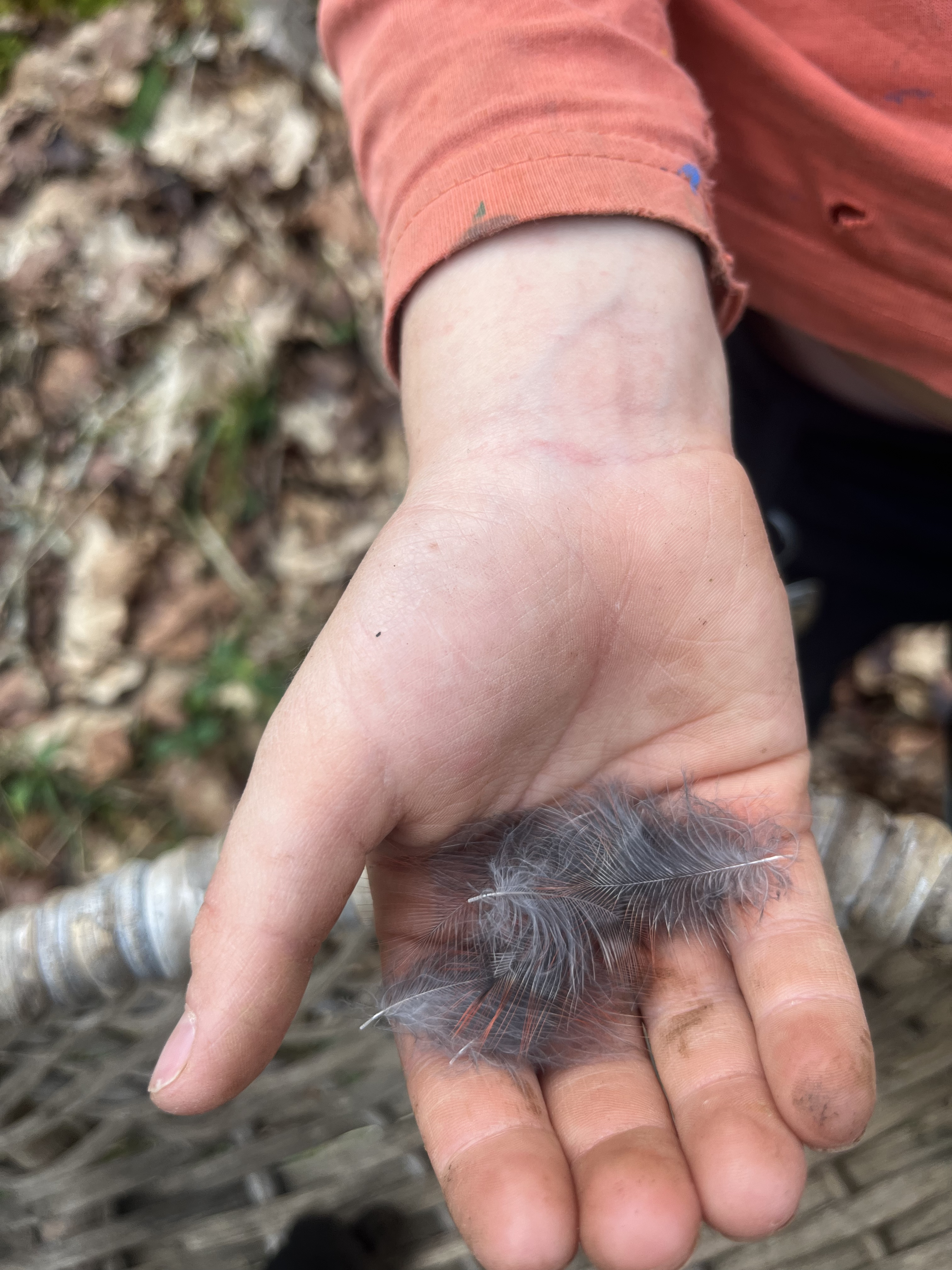
Nature has a way of inviting curiosity that structured activities rarely replicate. A trail of ants crossing a path, a feather on the ground, a beetle moving through the grass. Children often become completely absorbed in these small discoveries and what might look like "doing nothing" is actually something important. They are observing, experimenting, imagining, exploring. These moments build attention and creativity without anyone directing them.
Consistency matters far more than intensity. Small moments of contact with the natural world, repeated daily, do more than occasional big adventures ever could.
Screens
Nature-Led Parenting does not mean eliminating screens. Most families live in a world where digital devices are part of everyday life, and that is fine. The difference is often in how screens fit into the rhythm of the day. When children have already had movement, daylight and curiosity earlier, screens tend to feel less overwhelming and they become one activity among many, rather than the organising force of the whole afternoon. Transitions away from screens often become easier too. What the content is matters as well: learning to use screen time with intention is one of the most valuable shifts a family can make.
Evening
As the day winds down, small moments in nature can help signal to the nervous system that rest is coming. A slow walk while birds settle in the trees, watering plants in the garden, watching the sky change colour as the sun sets. These things bring a natural rhythm back into the day and for children, they provide a gentle shift from activity toward stillness. Many families find that when these rhythms become regular, bedtime transitions begin to soften on their own.
Small shifts, not perfect days
A nature-led day does not need to be perfect. There will still be rushed mornings, tired afternoons and screen battles. The goal is not to control every moment, it is to restore the environmental conditions that support calmer behaviour over time. More daylight, more movement, more curiosity, more contact with the living world. When those conditions return, something subtle begins to shift. Transitions soften, resistance reduces, attention stretches longer. Not because children suddenly changed, but because the environment around them did.
Nature-Led Parenting is not an all-or-nothing commitment. It is a direction, a series of small, repeatable shifts that compound quietly over time. The families who feel it most are usually the ones who stopped waiting for the perfect moment and simply stepped outside.
A simple place to start
If you'd like to begin experimenting with these shifts in your own home, the free guide below introduces the environmental conditions that most reliably support calmer behaviour - designed to fit into real family life, whether you live in a city, suburb, or countryside.
Free guide — practical starting points for calmer, steadier days at home.
👉 Download the free guide: 3 Shifts That Change Your Child’s Behaviour