A Bird, a Tantrum, and What Nature Taught Me About Calming My Child
This morning was chaos.
My four-year-old is in a very physical “if I don’t get my way, everyone suffers” phase — think Mike Tyson-level blows to the body. The strength and wrath of a perceived-to-be-wronged four-year-old is quite something… akin to some world leaders, perhaps.
In all transparency, I am finding this stage exhausting. I know, in my body, that I need to change the environment. That was the plan today, but we still had an hour before meeting cousins at the local woodland.
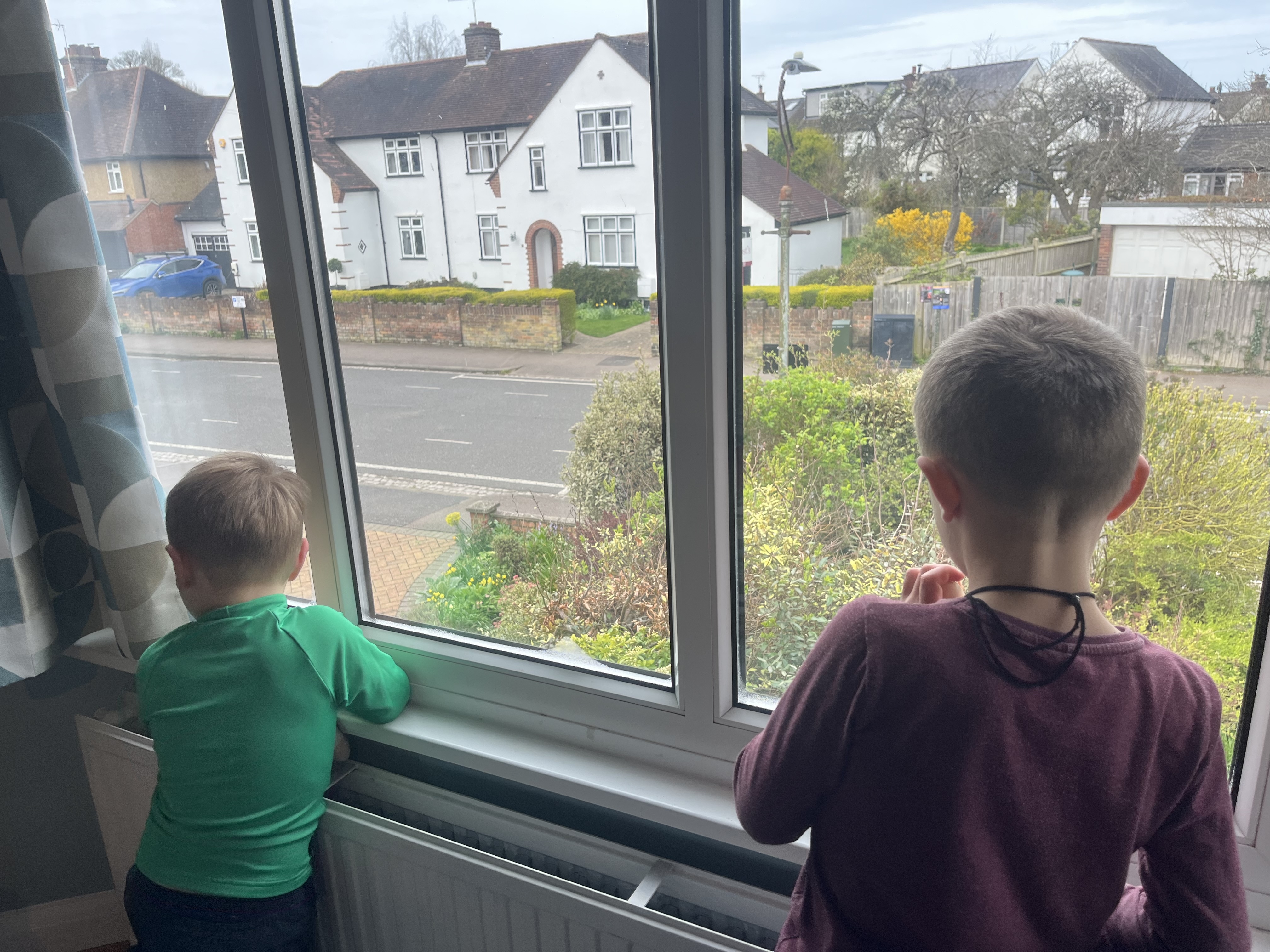
So instead I let him rage on and went to open the bedroom curtains, when I spotted a Blue Tit, feeding on seeds in the bushes, beside the driveway. I called the boys over to see and we watched him in silence for a few minutes, the tantrum forgotten.
There’s actually science behind moments like this. Psychologists call it Attention Restoration Theory and it is the idea that certain kinds of natural scenes gently hold our attention without effort, allowing the brain and nervous system to reset.
In other words, sometimes the fastest way through a meltdown is a bird on a branch.
We headed out to meet cousins, who have an equally high-energy boy and from experience we’ve learnt that the best way to spend time together is in wide, open spaces with plenty to explore.
They hadn’t arrived yet, and we had barely made it out of the car park before there was something to investigate:
“This, mummy… is worm poo!” And so began a very thorough tour of the car park’s worm poo piles.
This did turn out to be one of those longer wilder excursions but the joy along the way is in the details.
I saw endless dog walkers, runners and it reminded me of a conversation I have quite regularly where people often tell me -
'we walk, we run, we move from A to B (often with headphones in), and it doesn't make a difference for me'.
And what I’ve come to understand through my experience and through the lens of Nature-Led Parenting, is this:
It's not just about being in nature, it's about 'how' you are there that matters.
It's the stop to try and identify the bird that is calling. It's the 'oh look at that flower, we have those at home!' observations that reflect the kinship that grows from getting to know nature better. It's the stopping to build a den and make decisions on the best way to design said den.
We've all heard the 'it's the journey not the destination' metaphor for life. Now break that down into moment by moment and look for the joy in every one.
Because that is what nature, when truly engaged with, allows you to experience. And yes, today we spent a longer amount of time in nature, but it's the smaller rythms of daily communication with the natural world, the true relationship, that compounds and takes root over time - supporting emotional regulation, reducing overwhelm, and helping children naturally settle.
Later that afternoon over a cup of tea with my father in law I had the chance to properly explain what The Wild Shift is (he is a bit perplexed by it all in all transparency). But I found myself grounding it in the past two days. In how much I rely on time in nature — not just for child behaviour, but for nervous system regulation, for both me and the boys.
I am a huge believer in nature as the original nervous system regulator.
I’m also a believer that children (but actually not just children, humans as a rule) are meant to experience the full spectrum of emotions.
You can’t have the highs without the lows - just as nature has seasons, cycles, night and day.
What matters is not eliminating discomfort, it’s about what our baseline is. How easily we are triggered, how long we stay in it and how quickly we recover.
And I believe nature can support us at every stage:
By maintaining a steadier baseline, supporting us in the moment and helping us recover afterwards.
This afternoon, it was my older son’s turn. And no wonder he had hit his limit. His younger brother has been particularly… challenging, he was exhausted after a full day outside with cousins and he’s carrying a sleep deficit from a late flight. The conditions were primed for dysregulation.
He wanted to watch something, and as much as in the moment I didn't actually have a problem with that idea I didn't want it to be used as a bargaining tool for the tantrum.
So we rode the tantrum, it was rough but we made it through. And once things had settled, with dinner still an hour away, I suggested we watch a nature documentary. Because I’m a big believer in this: Screen time should serve you - not you being a servant to screentime. And that means conscious use, and conscious content.
How brilliant to be in the UK, the home of fantastic natural history documentaries thank you BBC! We watched episode one of 'Little Big Journeys' snuggled together on the sofa, embarking on the epic journey of a Bushbaby in South Africa and a Painted Turtle in Canada.
The boys were disgusted when the Bushbaby peed on its hand (to mark its territory and help it stick when it jumps from tree to tree) and then proceeded to eat with those same hands - ewgh! We cheered when the turtle made it the lake! And we discussed what cold blooded meant.
We learnt together and it was a treat.
And interestingly there is research that suggests that even watching natural environments, especially slower, nature-based content, can help reduce stress and support the nervous system.
There is actually research showing that even viewing natural environments - forests, water, animals - can have a calming effect on the nervous system.
Of course it's not the same as being outside, but when the content is slow, and when it’s watched together, with attention, it can still help shift state and help support familial connection. (It wasn't nature documentaries but one of my fondest family memories was Saturday night movie night all snuggled on the sofa with tubs of ice cream).
What’s missing from most screen time guidance - including the recent UK government guidance (which I shared my thoughts on here) - isn’t just limits, it’s relationship. Not just how much but how.
If you’d like to begin reducing meltdowns, gently take back control of screen time, and create a calmer home environment, this is where many families begin:
👉 Download the free guide: 3 Shifts That Change Your Child’s Behaviour
Katie, I love this guide! As a mother of a highly sensitive child, it resonates a lot! I do all things intuitively, I also read a lot on that. But I wish i had a guide like this earlier... Of course, all children need this, but especially the more sensitive ones. amazing what you are doing!
- Lyuba
Read the next day, Dragons, Bunnies, and Nature’s Small Wonders on the Journey