Why Children Behave Better Outside
Why Children Behave Better Outside
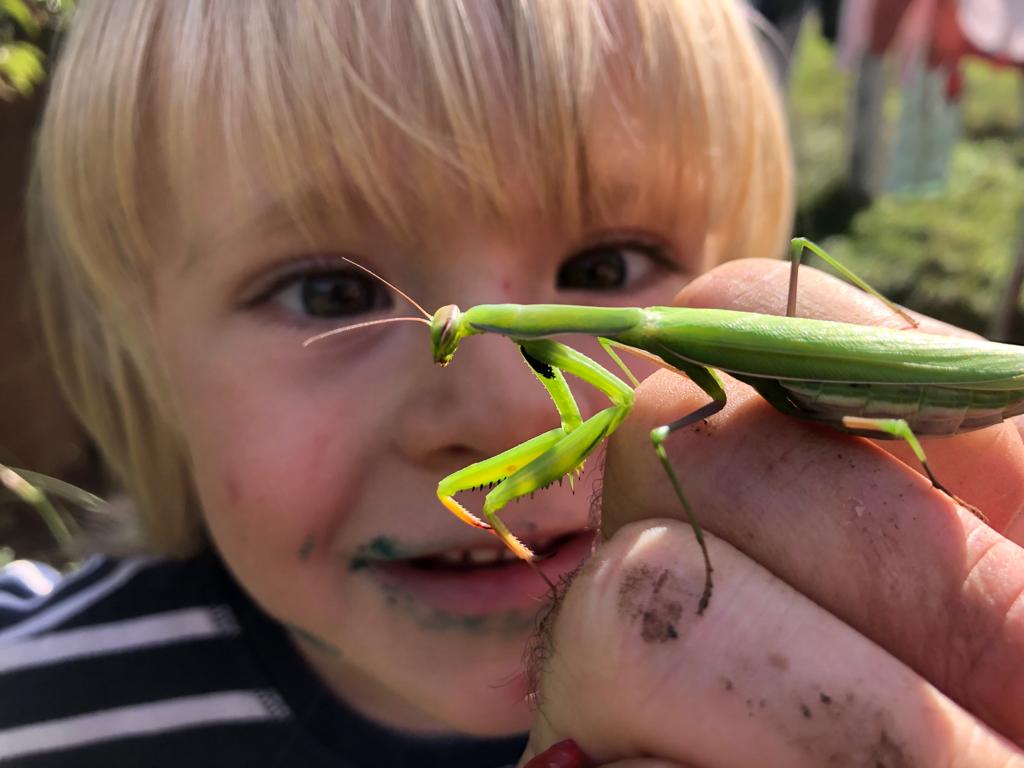
The same child who couldn't sit still indoors just spent twenty minutes watching ants.
An argument between siblings softens the moment everyone steps outside. A child who seemed bored inside spends half an hour following a beetle along a path. A child who struggled to settle can suddenly focus, explore and play without being directed.
It is easy to assume this happens simply because nature is entertaining, but the explanation may be deeper than that.
What Parents Notice
Inside the house, arguments escalate quickly, attention jumps between activities, children move from one request to the next.
Outside, something shifts. Children start climbing, digging, building, collecting, watching. Play becomes less structured. Instead of needing constant direction, children begin to follow their own curiosity and time seems to pass at a different speed.
Over time, many families notice that outdoor time brings a calmer rhythm to the whole day.
The Conditions Children Respond To
Natural environments provide a range of conditions that support healthy regulation. Natural light supports circadian rhythms and sleep. Movement releases energy and reduces internal tension. Open space invites exploration rather than directing attention. Sensory experiences - wind, soil, water, birdsong - help regulate the nervous system.
For most of human history, children spent large portions of the day moving between indoor and outdoor environments. They climbed, ran, explored, built, dug, followed insects and watched animals. These are the environments human childhood evolved within - offering exactly the conditions that shaped how attention developed and how the nervous system learned to regulate itself. Modern life has changed many of those conditions. The underlying human response to nature has not.
Regulation is environmental before it is behavioural. Change the conditions, and behaviour follows.
Curiosity Comes Alive
One of the most striking differences outdoors is how naturally curiosity appears. Inside, entertainment is often provided - screens, toys and activities are designed to capture attention quickly. Outside, attention works differently, curiosity is not delivered; it emerges.
A child notices a beetle crossing a path and follows it. They discover ants carrying leaves. A stick becomes a digging tool or a magic wand. A stone becomes something to build with.
This kind of self-directed exploration builds attention, persistence and imagination in ways that structured entertainment rarely does.
The Nervous System Slows Down
Natural environments also tend to slow the nervous system. Research in psychology and neuroscience increasingly shows that time in natural settings supports emotional regulation and reduces stress. Unlike highly stimulating digital environments, nature contains patterns that are complex but not overwhelming - leaves moving in wind, birds calling, the sound of water. These gentle patterns help the brain shift away from constant alertness and into a calmer, more regulated state.
For children, whose nervous systems are still developing, this shift can be particularly powerful.
It Doesn't Require Wilderness
A common misconception is that children need wild landscapes for these benefits to appear. In reality, even small contact with nature makes a difference. A patch of grass, a back garden, a short walk down a tree-lined street. Watching clouds move across the sky or looking for insects in a flower bed. What matters most is not distance from civilisation - it is the presence of living systems that invite curiosity, movement and exploration.
Small Moments, Big Changes
When families introduce small moments of outdoor exploration into daily life, they often notice gradual shifts. Children settle more easily, arguments soften and screens lose some of their pull. The day begins to contain more moments of curiosity and less constant stimulation.
These shifts do not happen because children are forced to behave differently. They happen because the environment around them has changed - and when environments change, behaviour changes with them.
"Instead of constantly managing behaviour, I felt like a guide. There was one moment where my three-year-old became completely absorbed in a worm crossing the path — the kind of thing we would normally walk straight past. Slowing down with her reminded me that so much of parenting isn't about controlling behaviour. It's about guiding them in their learning."
— Jemima, mother of two, on the 14-Day Wild Shift
A simple place to start
The ROOTS Framework - the foundation of The Wild Shift™ - is built on exactly this principle: that restoring the environmental conditions around a family is the most direct route to calmer behaviour, steadier attention and more connected days.
If you'd like a practical starting point, the free guide below introduces the three environmental shifts that make the biggest difference to daily family rhythm.
👉 Download the free guide: 3 Shifts That Change Your Child’s Behaviour