The Path That Led Us to The Wild Shift
How I Got Here
From a trading floor in the City of London to a rewilding farm in northern Spain - and everything that changed along the way.
There was a time when my life looked very different.
Straight out of university, I stepped into a career as a broker in the City of London. Fast-paced, high-pressure - the kind of job that, on paper, meant you were doing well. But very quickly, something began to feel off. Monday to Friday I would spend the entirety of the day indoors. Sometimes up to twelve hours without stepping outside, without fresh air, without seeing the sky. I could feel it, a heaviness I couldn't quite explain, a sense that something essential was missing. At the time I didn't have the language for it, I just knew I couldn't keep going like that.
So I left.
What followed was a journey that took me around the world, and eventually led me to the South Luangwa Valley in Zambia (the country of my father's birth) where I was managing a bush camp. That was where I met Luke Massey, the lodge's in-house photographer. Our passions aligned immediately: to see the world and its wildlife.
I had always had a deep love for the natural world. (My friends who travelled Australia with me will tell you they used to fear my turn to drive, in case a bird flew overhead - I had a tendency to get very excited and veer off the road.) I also had a passion for writing. Meeting Luke, and deciding to work together, allowed me to bring those two things together for the first time.
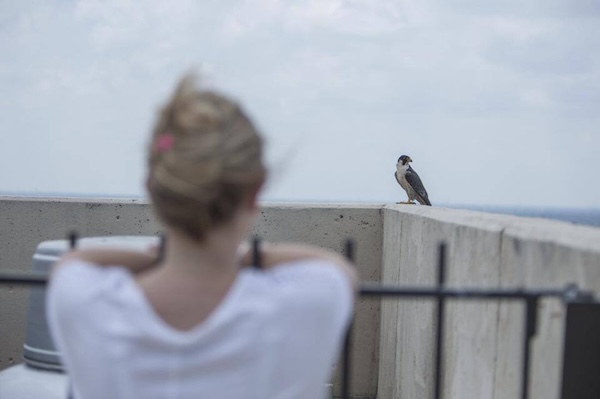
Very quickly, it became clear that what we were most drawn to wasn't the far-flung, extraordinary places - but the stories unfolding closer to home. One of our earliest and most defining projects followed a pair of peregrine falcons nesting in a flowerpot on a high-rise building in Chicago. The fastest bird in the world, making its home in the middle of a city. That story became a BBC/PBS Natural World documentary, and in many ways it shaped everything that followed.
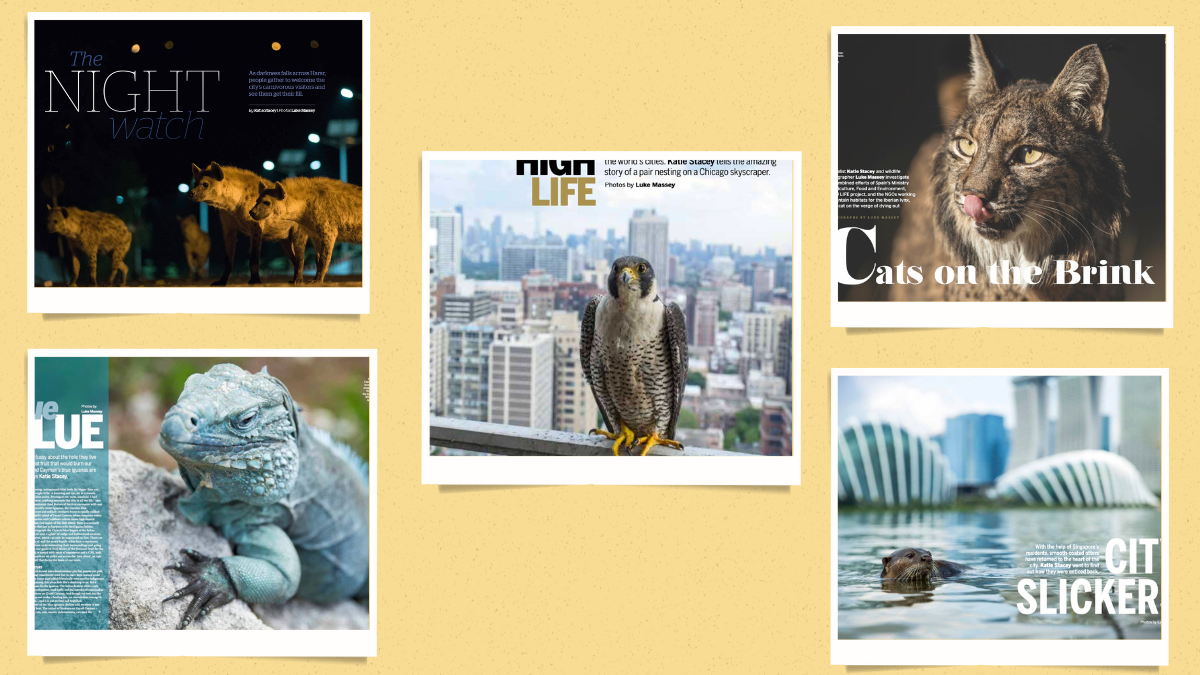
Over the next five years we documented stories of both resilience and fragility - hyenas in Ethiopia, otters in Singapore, the illegal wildlife trade, the return of wildlife to the Chernobyl exclusion zone. We saw nature's extraordinary capacity for rebirth. But we also saw its breaking points, and often we found ourselves documenting humanity's darker side: people living in impossible conditions, magnificent creatures reduced to objects, forests razed for quick profit.
One experience in particular has never left me. We were in Delhi, covering a story on black kites, when we found ourselves standing on top of Ghazipur — a vast mountain of rubbish at the heart of the city. We had gone there to photograph the birds, but it was the children I remember. Children as young as four or five, sifting through waste for anything they could sell. The smell was overwhelming. The danger was everywhere — the site sits one truckload from explosion, methane building silently beneath millions of tonnes of decomposing waste. I couldn't photograph it. I just stood there. That image has stayed with me ever since
By the time we moved to Asturias in January 2018, we were burnt out and ready for something different. We had fallen in love with Spain while documenting the Iberian lynx, and after exploring the north we realised it could be a place to base ourselves — and to tell the story of another captivating species: the Iberian wolf.
But we quickly arrived at an uncomfortable question: who were we to parachute in and tell a snapshot story of a species so deeply woven into the culture of the people living alongside it? We had fallen in love with the area. We wanted to stay. And we realised it was time to stop just telling the story and start living it. We wanted our hands in the earth. We wanted to live within the systems we had spent years documenting from a distance. It wasn't about escape — it was about participation.
And then we found Wild Finca.
Something shifted the moment we first drove down that driveway. It's hard to explain, but there was a physical release — a deep exhale, a sense of knowing: this is where we're meant to be.
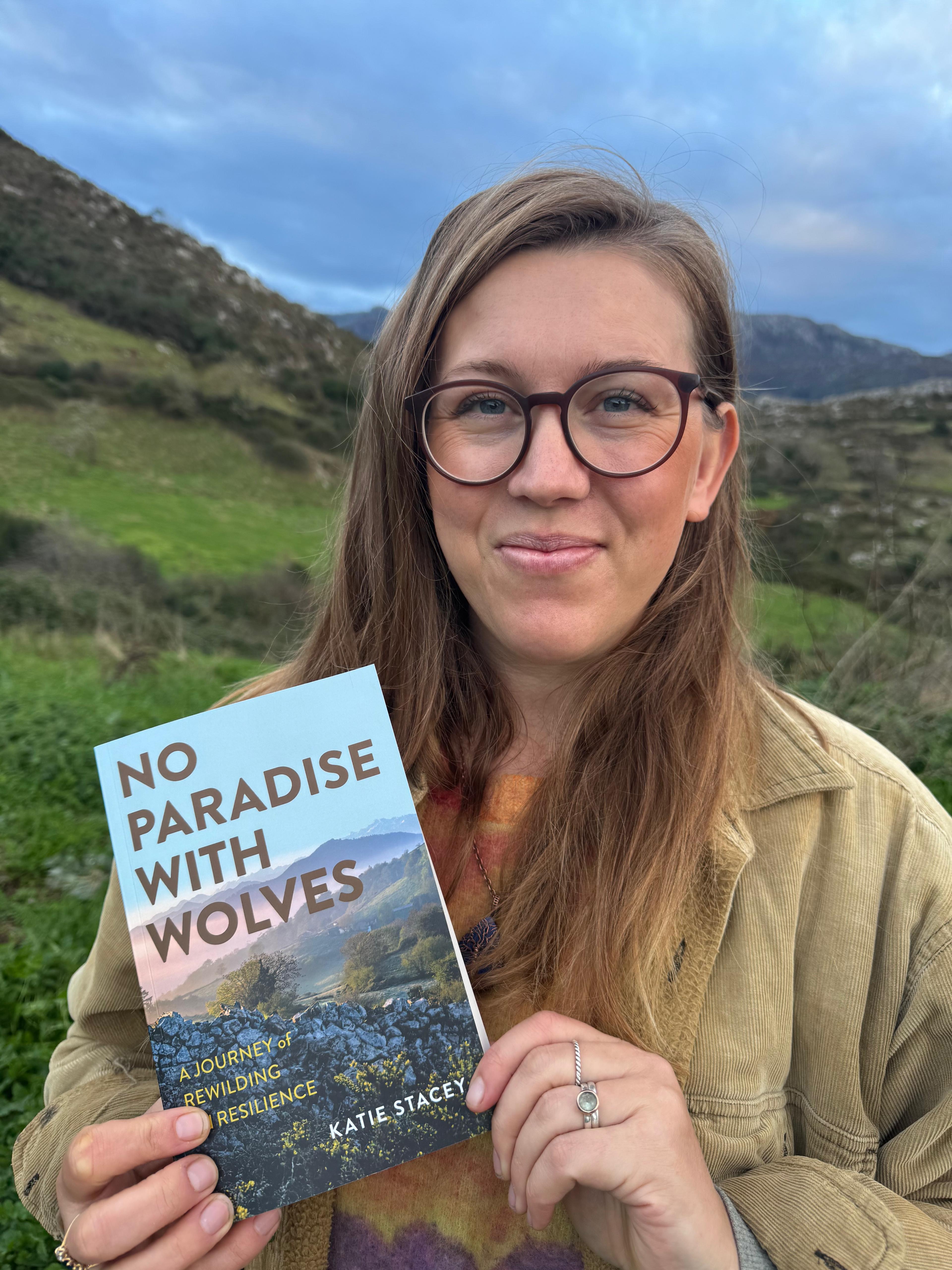
So we bought a defunct dairy farm in the mountains of Asturias. Not because we had a clear plan, but because we felt a deep, instinctive pull toward something more grounded. The reality was not romantic — constant uncertainty, bureaucracy, buildings to rebuild, land to understand. It was physical, demanding, and often overwhelming. But it was also, undeniably, alive. (That journey became No Paradise With Wolves, my debut memoir, later chosen as one of BBC Wildlife’s Best Books of 2025.)
Less than a year after we arrived, our first son Roan was born. Albus followed. And everything we had chosen before suddenly came into sharper focus - because now we weren't just asking how we wanted to live. We were asking: what kind of environment are our children growing up inside?
What I saw, day after day, was this: the land was shaping them. Not through anything we were deliberately teaching, but through what surrounded them. They moved differently, played differently, settled more easily after time connected to the natural world. There was a steadiness that didn't need to be forced.
We shared this on Instagram, and the same question kept coming back:How are your kids so curious, so confident, so connected? And then, when that connection wasn't there - when time in nature wasn't prioritised - I saw the difference too. More friction, more disconnection, more of everything feeling harder.
That's when something clicked into place. Something I had felt years earlier, sitting inside an office in London, but couldn't yet name.
We are not designed to live so far removed from the natural world, and our children feel that even more deeply than we do.
Children don't regulate through instructions first. They regulate through environment. When the environment is fast, loud and overstimulating, their nervous systems reflect that. When it is spacious, grounded and connected to the natural world, everything begins to settle. It's not about controlling the child. It's about creating conditions where cooperation becomes the natural outcome.
That realisation has shaped everything I do now. I can see how hard modern family life has become, not because parents are doing something wrong, but because of the conditions they're working within.
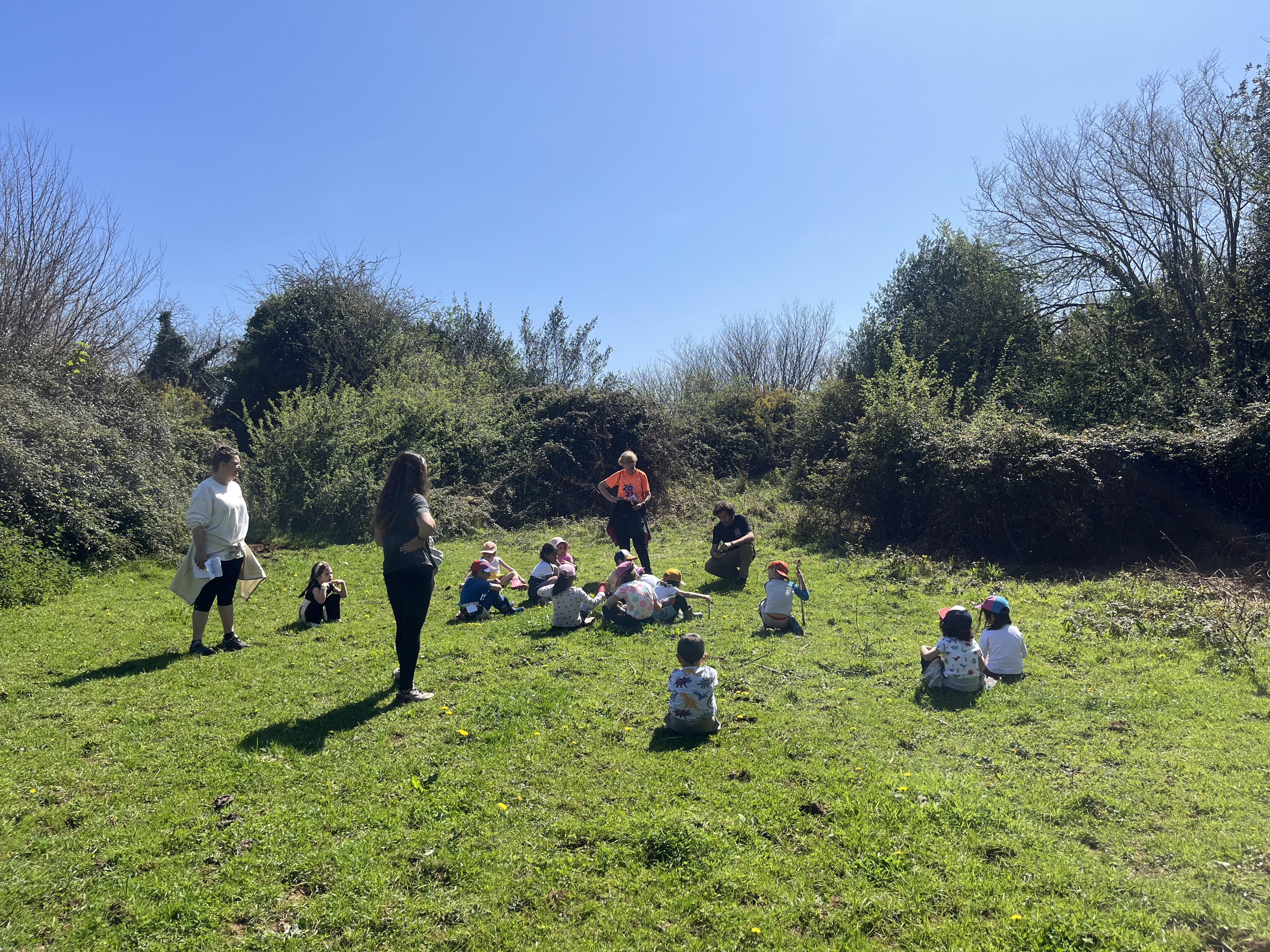
Today, my work spans both the wild and the everyday. At Wild Finca, we guide families, school groups and individuals on the land - helping them experience, first-hand, what happens when we reconnect with natural systems. Beyond that, I've helped curate urban nature walks showing that you don't need to go far to experience this. It's about noticing, getting curious, engaging, wherever you are. Because it's not the intensity of the experience that matters. It's the rhythm, it's the repetition.
This is why I created The Wild Shift and the idea of Nature-Led Parenting - to help families reconnect with nature as a daily rhythm, so their children (and their nervous systems) can actually thrive. Not through drastic change, but through small, consistent shifts in how daily life is shaped.
The City of London taught me what it felt like to be cut off from something essential. Wild Finca showed me what it looks like when the right conditions are restored. Everything in between has been figuring out how to help other families find their way to the same thing - wherever they happen to be standing.
If something in this resonated — if you've been feeling that sense that something isn't quite working, but can't quite name why — this is a place to begin.
👉 Download the free guide: 3 Shifts That Change Your Child’s Behaviour