Owls, Awe And What Children Really Take With Them From Time in Nature (with Wildlife Kate)
We began the morning watching Jamon York (as it’s called in Spain, ham slices as they are more widely known in the English language) out of the backroom window. Some out-of-date leftovers had been tossed onto the small back garden lawn for a lucky fox (despite cats and passing dogs more likely to enjoy them, as a footpath crosses just beyond).
But from there it hadn’t taken long for the house to shrink to the size of a tin can (of course it hadn’t, but you know that feeling where the children somehow are on top of each other no matter the size of the interior). And so we headed out for a wander in the woods and a drink and snack at the local café beyond. Grandpa had gotten into the swing of things and challenged the boys to find 10 birds in the woods — a challenge eagerly accepted, as they started shouting what could be seen through the window and had to have the rules reminded to them: “10 birds IN the woods”!
Chaffinch, Blackbird, a gull of some description. Sparrow and Goldfinch, all in quick succession. And then Roan, with great excitement, shouted “Wild garlic!” And swiftly after, that smell - unmistakable indeed. We vowed to pick a load on the way home.
Then Bluebells too, and Wood Anemones, a sign of ancient woodland (it is said that they extend their root system by only six feet per hundred years, so slow-spreading are they!).
A lot of very active Robins gathering nesting materials. One caught a very large worm not a foot away from us, and we all stopped and watched it consume the fat, wriggling meal.
As we reached the stream at the bottom, Roan spotted a Dipper, and some Mallards flew by overhead. We also found a huge, wine-gum-sized, red-bottomed bumblebee on the path. We thought he was dead, but he moved a little foot when Ro picked him up, and we tried to relocate him to a Celandine, but he was too heavy and rolled off into the greenery below.
Blackcaps, Great Tits and a Thrush (we think - Ro described it as “like the bird at home that smashes the snails on rocks around Wild Finca”).
We returned to Grandpa with a count of 14 different species - not all named, and I mention this to let you know that you don’t need to be able to identify the birds to play this game. But once you start playing, you might find you begin to know them.
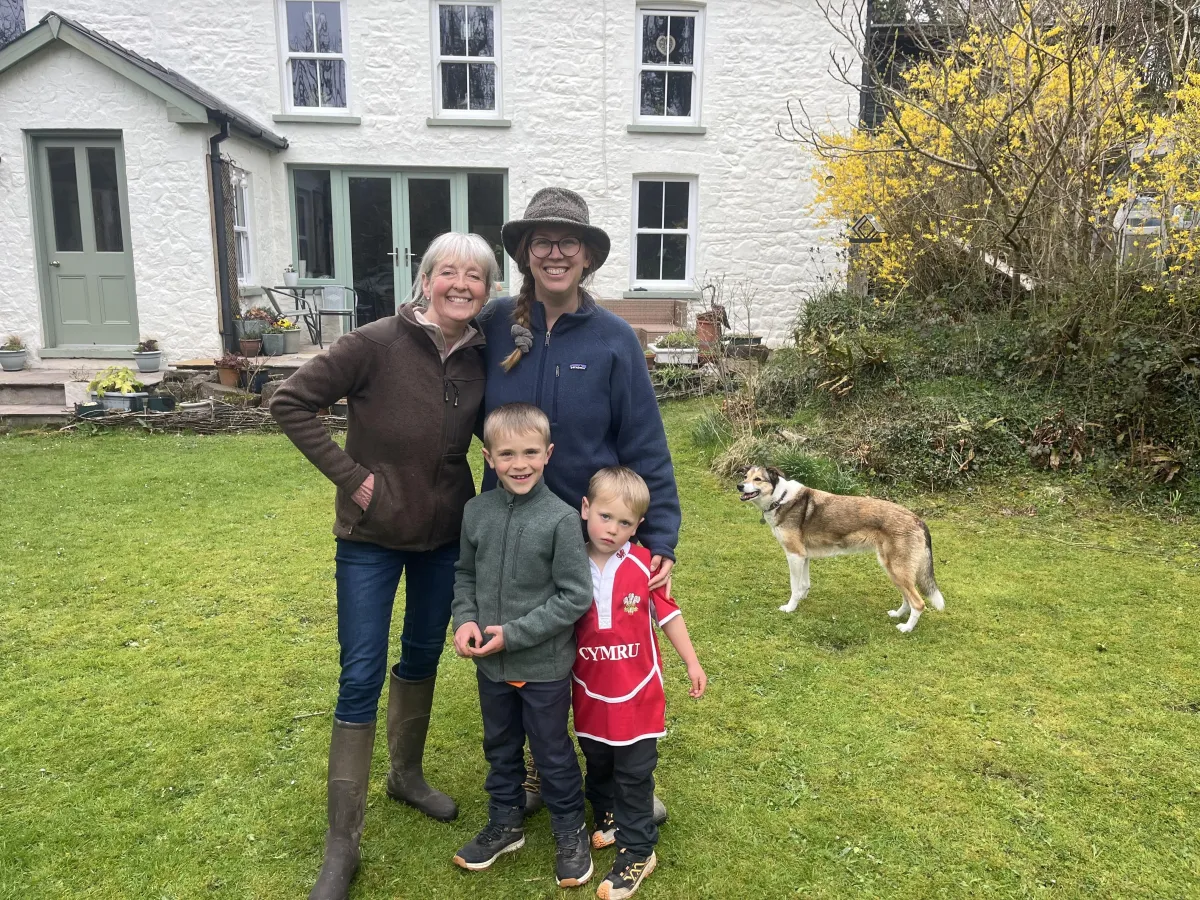
In the afternoon we had the absolute treat of visiting friend and nature communicator legend, Wildlife Kate. I’ve had the privilege of working with Kate over the past few years, and I’ve been following her incredible projects and live cameras throughout. Kate lives just under an hour from the little cottage we are staying in, so the opportunity to see her home in person was not one I was going to miss.
It was everything I had expected, and so much more. Kate has quite simply created an eden. We started the visit with tea and muffins inside her beautiful home, watching the livestream on the big screen beside her kitchen. Kate is famous for her incredible wildlife live cameras, and they are without a doubt an exception to the rule when it comes to screen time. They must be the slowest, most wholesome option of screentime out there.
The feeders were abuzz with Siskin, Greenfinch, Goldfinch and a Nuthatch. The Tawny Owl was asleep on her eggs, due to hatch any day now. I had been following the owls on Kate's Instagram, where recently she had shared a particular mystery for one day the Tawny Owl had four eggs, the next she had three. Kate was quite perplexed (as were any of us following along the highlight reel), as it really had appeared to have just vanished. Until, she told us, someone watching the live YouTube stream had contacted her to say they had seen the owl fly out with what looked to be a crushed egg stuck to her. So at some point the egg must have broken, become attached to her, and presumably she had cleaned it off once she was out and about.
Then there was her iconic nest box, the one she has designed like an apartment, furnished with a TV, shelf, pot plant and framed picture of a Blue Tit. It’s had many viewings, but (at the time of writing) it’s still on the market for any small birds who might be reading this and are yet to secure a nest site for the season ;-)
From there we headed outside, via the beautiful wild ponds she has created, to refill the bird feeders - a job the boys took great joy in assisting her with. And onwards to explore the rest of her wild world, whispering as we passed the sleeping Tawny Owl on her three eggs, the very one we’d just been watching on the livestream.
That evening, over dinner, we discussed what had been everyone’s favourite part of the visit with Kate. Albus’ had been all of the different skulls she had on display in the house, Roan and Grandpa’s had been the Tawny Owl, mine had been the livestream display - and the rather astonishing number of different birds active on there, and Grandma’s had been the incredible pond she had created in the old quarry behind the house. I nearly changed my choice, as this spot really was special - the sort of place that fairies most certainly hang out. Roan had spotted some Scarlet Elf Cups (a beautiful orange, cup-shaped fungus that look like the perfect fairy armchair).
I think I can safely say that we spent the afternoon in awe of Wildlife Kate and her wild home. And what a potent state of being awe is. The impact of awe more than just a warm feeling, it inherently biological, and the science backs it up. Awe is proven to lower stress chemicals, awe calms the nervous system, and awe softens reactivity in us and our children. Not over months of practice or after a full wellness routine, but in moments. The very moments that look like nothing much from the outside - a bird pulling a worm from the soil and swallowing it down whole, an owl asleep in a box, a flash of orange fungus on the woodland floor.
When we allow those moments to fill us with awe, something inside us recalibrates. There’s research showing that awe reduces inflammation in the body, the very same pathways linked to chronic stress. Which means those pauses we take, when we stop, crouch down, lean in, aren’t just slowing the day - they are having an overwhelmingly positive impact on our physical bodies.
And then there’s memory. We often think it’s the big things children will remember - the trips, the milestones, the “days out.” But the brain doesn’t work like that. It remembers what feels alive and awe acts like a highlighter pen in the mind, it marks a moment and says: this matters, keep this one. Which is why years from now, they may not remember the café… but they might remember the Robin with the worm, or the smell of wild garlic on their hands, or the tiny red cup of fungus that looked like a fairy should be sat on it.
And perhaps most powerful of all awe shifts what drives them. Screens pull children towards constant reward, the next level, the next clip, the next hit. But awe does the opposite. It draws them into curiosity and noticing. Into that deep, absorbed kind of play where no one is watching and nothing needs to be won. It’s why they climb the tree again, why they crouch down for longer than you expect, why they forget to ask for anything else - because they are wholly, bodily engaged in the moment.
So when we talk about reducing screen time, it’s easy to focus on what we’re taking away, but I believe this is the layer that matters more - what we are giving them, not just in its place, but in all the other moments too. When you resist the urge to fill every gap, when you stop fearing boredom, you create the conditions for awe. And awe, in turn, rewires stress, attention, memory, kindness and motivation - exactly the things screens erode. And once it does, it begins to restore the very things we worry screens are taking from them: their calm, their focus, their resilience, their sense of wonder in the world around them. All from moments that, on the surface, look small.
Head over to https://www.wildlifekate.co.uk/ for a peek at everything we saw - and you never know, maybe the Tawny Owl’s eggs might have hatched.
We ended the day under duvets in the backroom, two slices of ham gone, two remaining - perhaps we’ll get lucky with the fox tonight.
If this resonates…
For parents who want childhood to feel calmer, steadier and closer to nature, I’ve put together a simple guide:
5 Simple Ways to Raise a Nature-Connected Child
Small, daily moments that help children feel curious, confident and at home in the natural world.
If childhood is starting to feel increasingly indoors, scheduled or screen-heavy, this will show you how to gently bring nature back into the everyday - without adding more to your already full days. Because days like this don’t come from nowhere - they’re built in the small, often unnoticed moments.
Read Molehills, Catsharks, Shells & What Children Really Learn From Us