Part 2: What Wildlife Journalism Taught Me About My Kids
Part 2: What Wildlife Journalism Taught Me About My Kids
5. What looks wrong from the outside might be exactly right from the inside
The habitat we drove into on Grand Cayman's East End looked, to be completely honest, like a deathtrap.
Razor-sharp rocks, palm-frond-covered pits, trees that could strip skin from bone. Our guide had spent the drive over telling us about unprepared explorers who had gone missing in there. It felt hostile, inhospitable. Surely nothing could survive here.
It turned out to be the perfect habitat for the Grand Cayman Blue Iguana, one of the most endangered lizards in the world. The very features that made it brutal for us made it ideal for them. The rocks for thermoregulation, the dense cover for nesting, the isolation from predators. And the poisonous plants? Their delicacy.
What was a problem for us was a precise fit for them.
On the other side of the world, in the streets of Harar, Ethiopia, I saw a similar idea, this time in how a species is interpreted. In almost every culture across sub-Saharan Africa, the Spotted Hyena is feared, associated with witchcraft, evil spirits, livestock predation. Something to be driven away or destroyed.
In Harar, the same animal is welcomed through gates built specifically for it. For three hundred years the city has maintained a relationship with its hyenas, feeding them, naming them, believing they protect the city from evil spirits. The hyena men of Harar are community figures. The hyenas themselves are celebrated.
Same animal, same behaviour. Yet a completely different context, with a completely different outcome.
With your kids: Your job isn't to make your child fit an environment that wasn't designed for them. It's to understand what conditions they actually thrive inside, and build more of those.
Every difficult trait is a superpower in the right conditions. Getting curious about what those conditions are is where everything shifts.
I think about this with my own boys often. If they had been born into a different environment, more urban, more indoors, more rigid, they might easily have been labelled ADHD. The characteristics are certainly there. But in another time, they wouldn't have been seen as "restless" or "too much." Anthropologists call this the "hunter vs. farmer hypothesis." Traits we pathologise today, constant energy, quick reactions, the drive to move, could once have been survival superpowers in a hunter-gatherer world. What we do daily is ensure they have ample opportunity to exercise those superpowers.
6. Change the conditions, not the creature
When I arrived inside the Chernobyl Exclusion Zone I expected devastation, a ghost town.
Instead I found wolves exploding from reed beds. Eurasian Beavers swimming in the cooling ponds beneath the power plant. Elk grazing in what had once been city streets. Brown Bears returning for the first time in decades. Life, extraordinary, abundant, resilient life, reorganising itself.
Nobody had managed this. Humans left, the conditions changed, and nature did what nature does when given half a chance.
With your kids: The most powerful question in parenting isn't "how do I manage this behaviour?" It's "what conditions produced it, and what conditions would produce something different?" Lower the overall activation. Reduce the sensory input. Create more rhythm and predictability. Add more real-world nature and less digital noise. Tend the environment your child is growing inside.
Change the conditions and watch what happens naturally.
7. Never judge from a single moment
In a dimly lit kitchen in Austria, Dr Hans Frey lifted a paper towel from an old ice cream tub to reveal a tiny, feebly stirring bundle of down. With tweezers he offered it a morsel of meat. This small chick could be critical to the survival of one of Europe's most extraordinary birds.
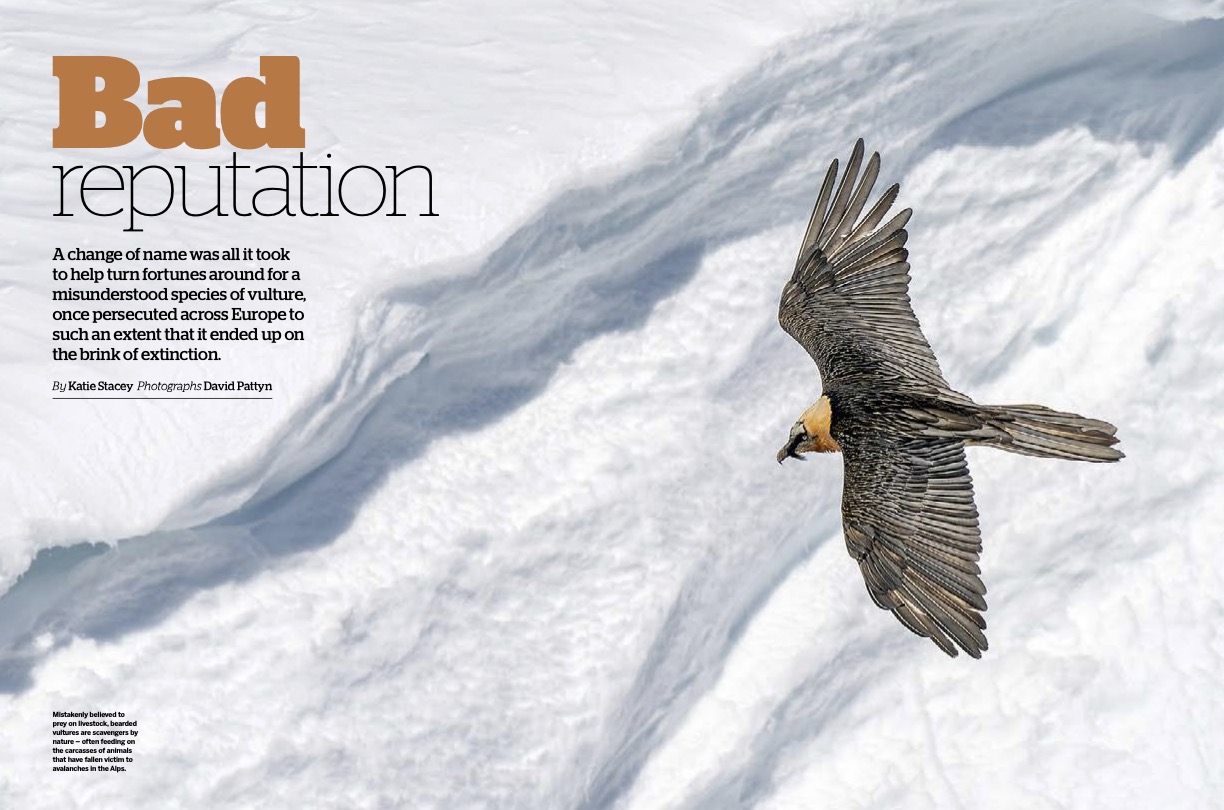
The Bearded Vulture had nearly vanished from Europe entirely, and the reason came down to a misunderstanding. Someone saw one carrying a lamb carcass and assumed it had killed it. That single misread moment gave the bird its old name: lammergeier, Lamb killer. The Bearded Vulture, like all vultures, is a scavenger, but their particular approach is to find bones, fly to a great height, and drop them to crack them open. It's most likely that's what that bird was doing, sweeping up a dead lamb. As a result, farmers persecuted them for generations. One observation, taken out of context, drove a species to the brink of extinction.
The recovery required extraordinary patience. First releases in 1986. First wild breeding pair confirmed eleven years later. A decade of tracking individual birds before scientists could assess whether it was even working.
We learned the same lesson on a 28th floor balcony in Chicago, spending fourteen-hour days photographing Peregrine Falcons nesting in a flower box above the city. Three visits. Eight thousand photographs. The full arc of a family, courtship, eggs, hatching, first flights, invisible on day one, revealed only over time.
One snapshot tells you nothing. The real picture takes time.
With your kids: Difficult moments, a meltdown, an outburst, a refusal, an act of aggression, can calcify into a label. He's the difficult one. She's so sensitive. He just can't cope. Labels built on single incidents, observed without context or patience or curiosity, have a way of becoming self-fulfilling. Your child begins to live inside the story you tell about them.
Track patterns instead. One hard week tells you almost nothing. One hard month observed with curiosity rather than judgement tells you so much more.
The real story always reveals itself. You just have to keep watching.
The field journal
Wildlife journalism taught me to be patient. To observe closely, to look for causes before conclusions. To understand that behaviour is always a response to conditions.
Your child isn't a mystery to be solved. They're an ecosystem to be understood.
But here's the twist I want to leave you with. Go back through those seven techniques and replace your child with yourself.
Because your child's nervous system is in relationship with yours. What you embody, they absorb.
You're not just observing the ecosystem. You are part of it.
Tend to yourself first and everything else follows.
If you're ready to start shifting the conditions rather than managing the behaviour, the Three-Step Reset Guide is your starting point.
It's a simple, practical framework built around everything we've covered across both parts, designed to help you observe more clearly, react less, and tend the environment your child is actually growing inside.
Download it free at thewildshift.com/three-step-reset