The Wild Shift
About Katie Stacey
Most parenting approaches start with parenting theory.
Mine started with wildlife.
I didn't find The Wild Shift in a parenting book. I found it in more than a decade of watching behaviour change in the natural world, and then in the humbling, exhausting, extraordinary reality of raising two spirited boys of my own.
For over a decade, I worked as a wildlife journalist and science storyteller, asking one question across some of the most extraordinary environments on earth:
what actually changes behaviour?
Then I became a mother.
If you're living with daily meltdowns, constant defiance, or a home that feels permanently on edge then this work was built for you.
In my years reporting for the BBC Wildlife, BBC Science Focus, and National Geographic, backed by an honours degree in science from the University of Edinburgh, I watched the same principle play out again and again.
Peregrine falcons adapting to city skyscrapers.
Smooth-coated otters returning to Singapore's waterways.
Wolves reclaiming the abandoned landscapes of Chernobyl.
The pattern was always the same.
Behaviour changed when conditions changed.
Not through force. Not through punishment. Not through control.
When stress reduced. When environments shifted. When the environment supported thriving.
At the time, I had no idea how relevant that would become inside my own home.
I have two loud, spirited, incredible boys. And I found parenting really hard at times.
There were moments I'm not proud of. Moments where I felt completely overwhelmed. Moments where I thought:
I love you... but I do not like this right now.
Like many parents who find me, I had tried the calm scripts. The boundaries. The right words. The reward charts. And still found myself living through meltdowns, pushback, and moments that brought me to my knees.
What I realised later was this: I had been expecting behaviour my child's nervous system simply couldn't deliver consistently. Not because I was a bad parent.
Because no one had explained what a child’s nervous system can realistically handle at different stages of development.
The real change came when I stopped trying to say the right things and started changing my own state.
Because my child could feel me. And when I became calmer for real, everything shifted.
That's when it clicked.
I had spent years watching this exact principle in nature.
You don't force behaviour to change. You change the conditions. And behaviour follows.
As humans, we are not nearly as separate from nature as modern life likes to suggest, and we are far more shaped by our environments than modern life likes to admit.
What I came to understand changed everything:
What looks like a behaviour problem is often a body problem.
And what shapes that body state is environment, not one isolated moment, but the cumulative effect of daily life.
You see a child's nervous system is constantly reading safety.
When it feels safe, children can listen, cope, transition, and handle small frustrations. When it doesn't, the thinking brain goes offline. And all the carefully chosen scripts and consequences in the world struggle to land.
That's why so many parents feel like nothing works.
They've been given tools for the surface of the behaviour. Not the conditions underneath it.
That's what The Wild Shift does. We change the conditions underneath the behaviour, upstream from what you see, so that the behaviour downstream can change too.
Through The Wild Shift, I help overwhelmed parents significantly reduce meltdowns, defiance, and explosive behaviour by changing the conditions that create them.
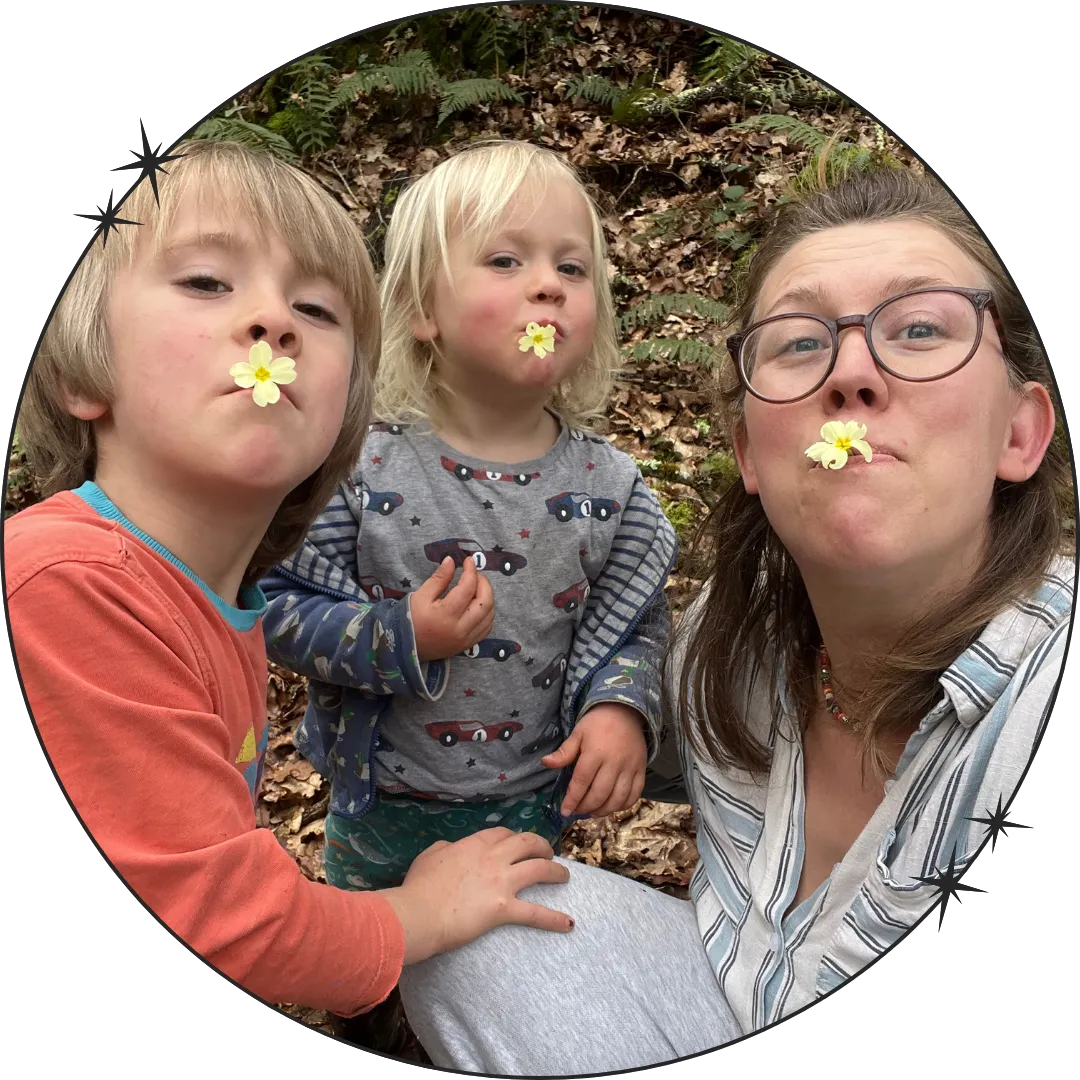
Today, my husband Luke and I live in Asturias with our two boys, where we're restoring a former dairy farm into a wilder, more biodiverse landscape through our rewilding project, Wild Finca.
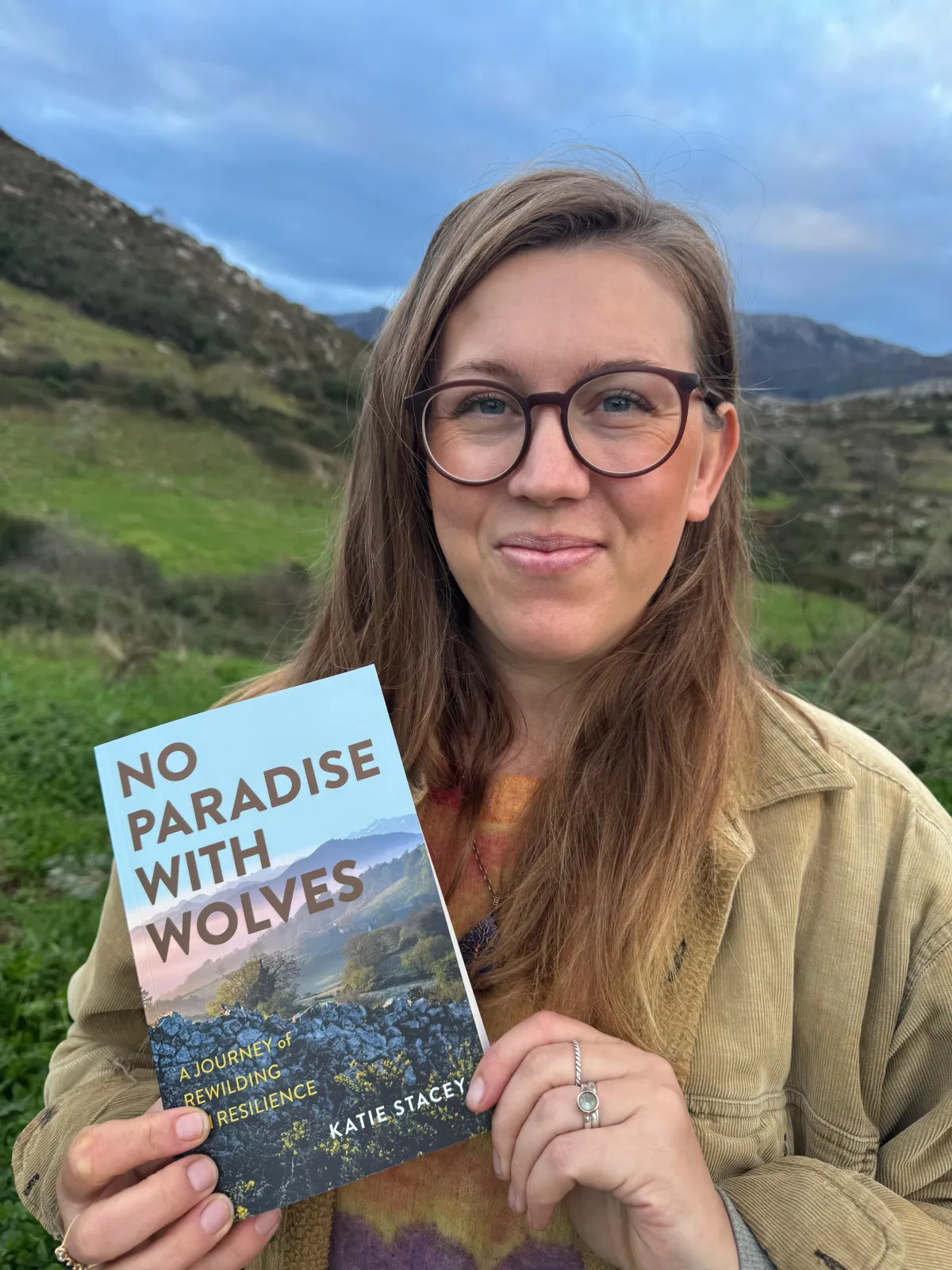
This experience became the foundation of my book, No Paradise with Wolves: A Journey of Rewilding and Resilience, named one of BBC Wildlife’s best books of 2025 and described by Publishers Weekly as “lyrical and hopeful… an immersive portrait of rewilding.”
Living this way has only deepened what I already suspected:
When conditions change, life responds.
That is true in ecosystems.
And it is true in families.
If family life feels harder than it should right now, if you're exhausted from trying everything and watching it still not stick, I want you to know something.
Your child is not broken.
You are not failing.
But the conditions shaping your family life may be working against you.
That's exactly what we change inside The Wild Shift.
If you're ready to explore whether The Wild Shift could help your family, book a free call below.
The Wild Shift
Restore the conditions that shape your child’s behaviour.
Nature-anchored rhythms for families raising children in a screen-saturated world.
The Wild Shift
Restore the conditions that shape your child’s behaviour.
Nature-anchored rhythms for families raising children in a
screen-saturated world.
The Wild Shift
About Katie Stacey
Most parenting approaches start with parenting theory.
Mine started with wildlife.
I didn't find The Wild Shift in a parenting book. I found it in more than a decade of watching behaviour change in the natural world, and then in the humbling, exhausting, extraordinary reality of raising two spirited boys of my own.
For over a decade, I worked as a wildlife journalist and science storyteller, asking one question across some of the most extraordinary environments on earth:
what actually changes behaviour?
Then I became a mother.
If you're living with daily meltdowns, constant defiance, or a home that feels permanently on edge then this work was built for you.
In my years reporting for the BBC Wildlife, BBC Science Focus, and National Geographic, backed by an honours degree in science from the University of Edinburgh, I watched the same principle play out again and again.
Peregrine falcons adapting to city skyscrapers.
Smooth-coated otters returning to Singapore's waterways.
Wolves reclaiming the abandoned landscapes of Chernobyl.
The pattern was always the same.
Behaviour changed when conditions changed.
Not through force. Not through punishment. Not through control.
When stress reduced. When environments shifted. When the environment supported thriving.
At the time, I had no idea how relevant that would become inside my own home.
I have two loud, spirited, incredible boys. And I found parenting really hard at times.
There were moments I'm not proud of. Moments where I felt completely overwhelmed. Moments where I thought:
I love you... but I do not like this right now.
Like many parents who find me, I had tried the calm scripts. The boundaries. The right words. The reward charts. And still found myself living through meltdowns, pushback, and moments that brought me to my knees.
What I realised later was this: I had been expecting behaviour my child's nervous system simply couldn't deliver consistently. Not because I was a bad parent.
Because no one had explained what a child’s nervous system can realistically handle at different stages of development.
The real change came when I stopped trying to say the right things and started changing my own state.
Because my child could feel me. And when I became calmer for real, everything shifted.
That's when it clicked.
I had spent years watching this exact principle in nature.
You don't force behaviour to change. You change the conditions. And behaviour follows.
As humans, we are not nearly as separate from nature as modern life likes to suggest, and we are far more shaped by our environments than modern life likes to admit.
What I came to understand changed everything:
What looks like a behaviour problem is often a body problem.
And what shapes that body state is environment, not one isolated moment, but the cumulative effect of daily life.
You see a child's nervous system is constantly reading safety.
When it feels safe, children can listen, cope, transition, and handle small frustrations. When it doesn't, the thinking brain goes offline. And all the carefully chosen scripts and consequences in the world struggle to land.
That's why so many parents feel like nothing works.
They've been given tools for the surface of the behaviour. Not the conditions underneath it.
That's what The Wild Shift does. We change the conditions underneath the behaviour, upstream from what you see, so that the behaviour downstream can change too.
Through The Wild Shift, I help overwhelmed parents significantly reduce meltdowns, defiance, and explosive behaviour by changing the conditions that create them.
Today, my husband Luke and I live in Asturias with our two boys, where we're restoring a former dairy farm into a wilder, more biodiverse landscape through our rewilding project, Wild Finca.
This experience became the foundation of my book, No Paradise with Wolves: A Journey of Rewilding and Resilience, named one of BBC Wildlife’s best books of 2025 and described by Publishers Weekly as “lyrical and hopeful… an immersive portrait of rewilding.”
Living this way has only deepened what I already suspected:
When conditions change, life responds.
That is true in ecosystems.
And it is true in families.
If family life feels harder than it should right now, if you're exhausted from trying everything and watching it still not stick, I want you to know something.
Your child is not broken.
You are not failing.
But the conditions shaping your family life may be working against you.
That's exactly what we change inside The Wild Shift.
If you're ready to explore whether The Wild Shift could help your family, book a free call below.

ThE wild shift
© Copyright 2026 The Wild Shift. Privacy Policy ı Cookies ı Terms & Conditions ı Disclaimer