What The Wild Shift Actually Is And How It Works
You've tried the calm voice. The sticker charts. The consequences, the countdowns, the reward systems that worked for two weeks and then quietly fell apart. You've read the threads, bought the books, taken the advice of people who made it sound simple.
And you're still here. Still in it. Still wondering why nothing seems to actually stick.
That's not a parenting failure. That's what happens when you're given the right intention and the wrong tool. Because almost everything you've been handed was designed to manage behaviour at the surface. And behaviour is never just at the surface.
What's underneath it, and how to start changing it, is what this is about.
Your child's behaviour isn't a choice. It's a body alarm.
Every child has an internal alarm system. All day long it asks one question: am I safe?
When the answer is yes, they can listen, cope, handle small frustrations. When the alarm fires, everything changes. The wrong cup causes a meltdown. They can't hear a word you're saying. It looks like they're choosing this. But they aren't. Their body hit the alarm. And when that happens, they're trying to cope, not misbehave.
The part of the brain that says "this is fine, stand down" is still being built. It won't finish until their mid-twenties. So when the alarm fires, almost nothing brings it back down. It just keeps going.
And the alarm gets easier to trigger the more it's triggered. Think of a smoke alarm going off for burnt toast instead of real smoke. That's what happens when a nervous system lives in a high-stimulation environment day after day. iPad time ending. Shoes that need putting on. A meal that was fine ten minutes ago. The alarm isn't broken. It's been calibrated too high.
There are four things that tell you whether this is what's happening. How often it occurs. What sets it off. How long it lasts. How fast they recover. When the answer to all four is "all the time, everything, forever, never," that isn't a difficult child. That's a body in chronic alarm.
By the time you see the explosion, it's been building for hours.
Think of your child's body like a bucket. Every stressful thing adds water. A rushed morning. A loud classroom. Transitions, instructions, noise, demands. Each one manageable on its own. But if water goes in faster than it drains, the bucket is nearly full before they walk through the door. Then something small happens. And it tips.
It was never about the thing. It was everything that came before it.
Screens look like rest. Your child is quiet, sitting still. But the brain stays busy. Something new keeps appearing. Attention keeps being pulled. That isn't real rest. Without real rest, the bucket doesn't drain. Even sleep doesn't always fix it. A body running hot all day doesn't just switch off when their head hits the pillow.
So the bucket stays full. And the next day starts almost where the last one ended.
Nothing has worked because the tools were built for the wrong moment.
Reward charts. Consequences. Calm scripts. They all have one thing in common. They only work when a child can think. And in those biggest moments, they can't.
When the alarm fires, the thinking brain goes offline. They can't reason, learn, or hear you. Their body has one job: protection. Survival doesn't negotiate.
That isn't failure. That's having the right intention and the wrong tool.
But there's something else almost nobody explains. Your child isn't just hearing your words. They're feeling your state. Heart racing, jaw tight, breathing shallow. They feel that before you say a word.
Children settle through co-regulation. They borrow calm from the person beside them. Like a child learning to ride a bike, at first you hold the seat, then run alongside, eventually they go alone. Regulation works the same way. They learn it through you.
But when you're running on empty, there's nothing left to lend. Two nervous systems in a loop, each making the other worse.
That changes the question completely. Not "how do I control this behaviour?" but "how do I change the body state underneath it?" Because when the body state changes, behaviour changes with it.
You aren't stuck. And neither is your child.
The same thing that made the nervous system sensitive makes it changeable. It learned this pattern from the conditions around it. It can learn a different one from different conditions. Scientists call this neuroplasticity. The brain builds new pathways through repeated experience. In younger children it's especially powerful.
The first sign of change usually shows up in you, not your child. Where you used to react, you find a little room. Just enough space to think: they're having a hard time. And that moment unfolds completely differently. That's what this builds. Not perfection. Space.
Even a small shift in you creates a shift in them. The question stops being "what is wrong with my child?" and becomes "what does this child need to thrive?" That's a completely different starting point. And it changes everything.
Nature is the tool most parents have never been properly shown how to use.
Getting outside isn't enough on its own. A rushed walk while you're checking your phone doesn't change much. Being outside is one thing. Letting the body actually slow down outside is something else entirely.
Our nervous systems evolved surrounded by natural light, birdsong, the movement of leaves and water. Nature isn't a nice addition to modern life. It's what the system was built for. And when those inputs are present in the right way, they don't just improve mood. They shift the baseline.
Researcher Dr Roger Ulrich found that surgery patients with a view of trees recovered faster, needed less pain medication, and went home sooner than patients with a view of a brick wall. Same hospital, same care. Just the view. That's how strongly the body responds.
One walk won't change things. But small, repeated moments in nature with real attention, done consistently, rewire the baseline. The body starts expecting something different.
This is where curiosity comes in. Not forced curiosity. Your curiosity. You notice something and genuinely pause. A spider's web. Light through leaves. A worm after rain. Curiosity is contagious. A child who flatly refuses instruction will almost always follow genuine wonder. Because wonder isn't a demand. It's an opening.
What The Wild Shift is and how it works
The Wild Shift is a three-stage programme built on one principle: behaviour isn't a discipline problem. It's a conditions problem. When the conditions change, behaviour changes with them. The three stages build on each other deliberately, and the order matters.
Reset comes first, and it starts with you, not your child. Before anything else can change, you need a regulated nervous system to lend. Reset builds simple daily anchors into the rhythm you already have, using natural light, movement, and time outside, so that calm is present in your body before the hard moment arrives. Not as a technique you reach for when things go wrong. As a baseline you've already built.
Rewire is where your child comes in. Using what I call Curiosity Anchors, small repeated moments of genuine outdoor connection, we begin to recalibrate your child's nervous system so the alarm doesn't fire so easily. Not by banning screens or forcing fresh air. By making nature a natural part of the day until the body starts expecting something different. That's when the window widens. That's when recovery gets faster.
Reconnect is what makes it last. Most change collapses not because the approach was wrong, but because nothing in the environment was built to hold it. Reconnect installs simple rhythms into the routines you already have, so when life gets chaotic, getting back on track takes minutes, not weeks.
Each stage compounds the one before it. Most parents notice something different within the first couple of weeks. Not perfection. A little more space where there used to be friction. A morning that feels slightly less like a battle. A child who comes back faster when they do lose it.
What the shift actually looks like
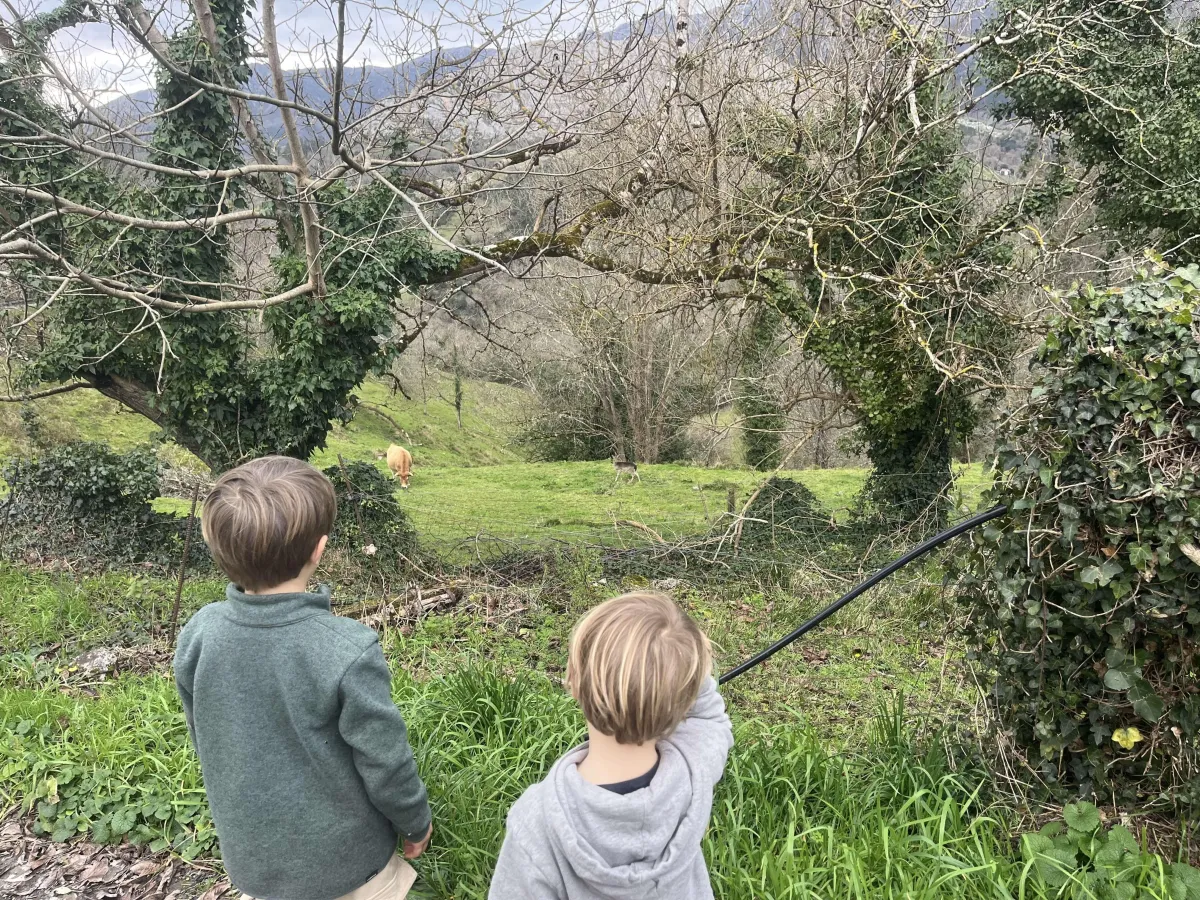
My son Roan has been building a crane for four days. It's collapsed at least twice a day since he started. Each time there's a moment of frustration, real, felt, expressed. And then he goes back to it, stronger than before.
These days he and his brother are thick as thieves. Teammates seventy percent of the time. What's changed isn't that the hard thirty percent has disappeared. It's that we have the capacity to hold it. To stay curious instead of catastrophising. To come out the other end connected rather than fractured.
That's the shift. Not the absence of hard moments, but fewer of them. The ones that still happen don't last as long, with quicker recovery. And something steadier inside you when they arrive.
Ready to start?
I've put together a free Three-Step Reset guide that walks you through exactly where to begin. It's short, practical, and built for parents who are already exhausted and don't need more theory. Sign up here and you'll go straight to the video.