How Childhood Environments Shape Children’s Behaviour
How Childhood Environments Shape Children's Behaviour
We spend a lot of time trying to change what children do. We spend far less time thinking about the conditions that shape it.
Many parents today feel that something about childhood has changed. Children seem more restless, attention is harder to hold, transitions escalate into conflict more quickly and screens become the easiest way to settle the day. When behaviour becomes difficult, the natural instinct is to search for better strategies, stronger boundaries, more consistent discipline, any technique that might help manage the moment.
But what if behaviour isn't shaped only by parenting strategies? What if it is shaped, more fundamentally, by environment?
Behaviour is ecological
In the natural world, behaviour is rarely random. Animals respond to the conditions around them, food availability, habitat structure, light, movement and social dynamics all shape how creatures behave. Change the environment, and behaviour changes with it. This is not a metaphor, it is one of the most consistent findings across decades of wildlife science.
For over a decade I worked as a wildlife journalist documenting animal behaviour around the world, from otters navigating Singapore's waterways to wolves returning to landscapes they had been absent from for generations. The same pattern appeared in almost every story I covered: it was the conditions surrounding an organism, more than any individual trait, that shaped how it behaved.
Years later, raising my own children within a rewilding landscape in northern Spain, I began to notice the same principle operating much closer to home.
I was speaking recently with a mother who had parented across two generations, before and after screens became constant and portable. "This feels like uncharted territory," she said. And she isn't imagining it, the environments children are growing up in really have changed that rapidly.
What modern childhood environments remove
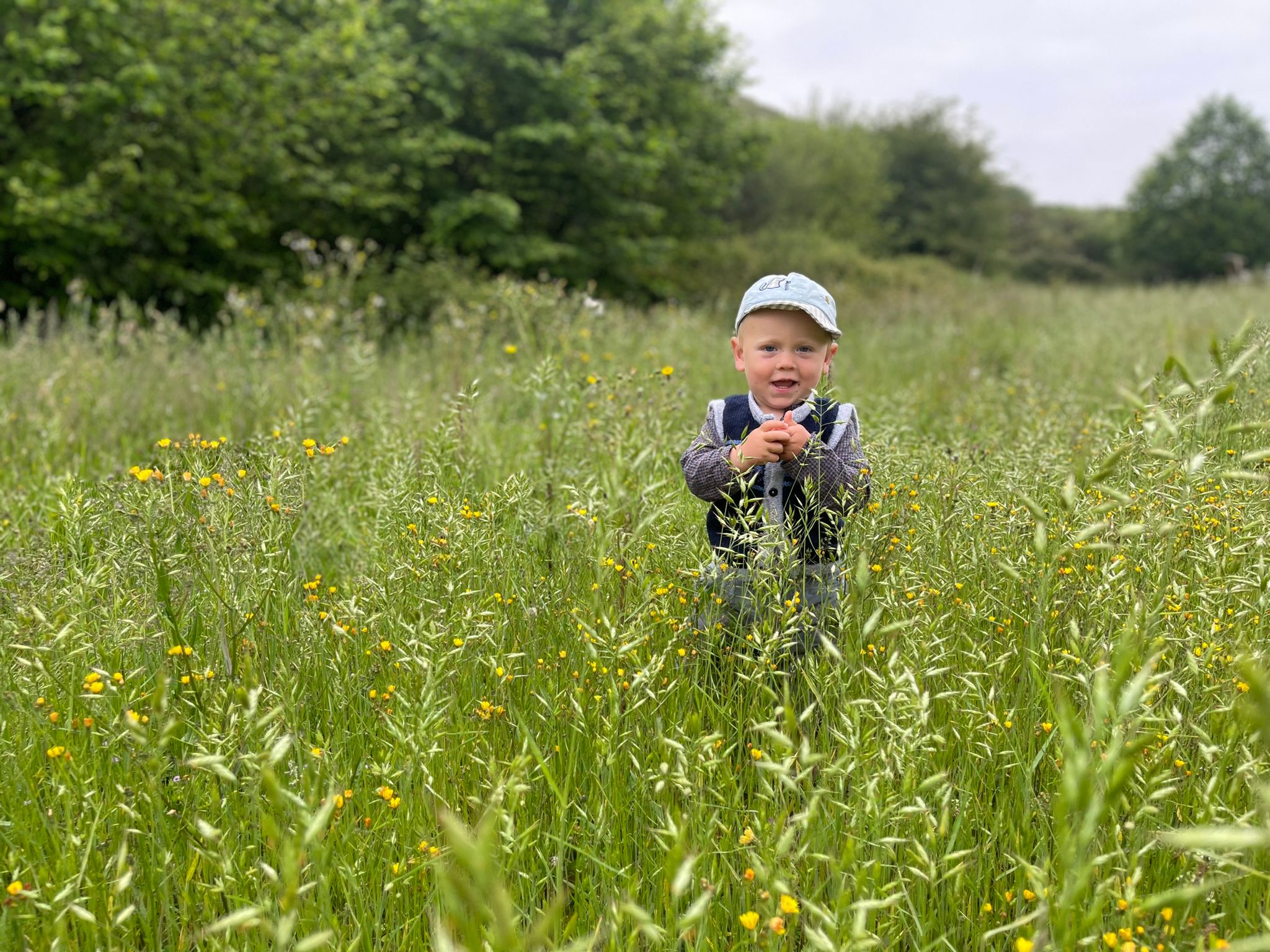
For most of human history, children moved constantly between indoor and outdoor spaces. They climbed, ran, explored, built, dug, followed insects and watched animals. These were not incidental experiences but isntead they were the conditions within which children's nervous systems learned to regulate themselves, attention developed, and curiosity became a natural state.
Modern childhood environments look very different. The shift has happened gradually and without any single cause, which makes it easy to miss.
Childhood evolved within
Natural light, constant movement, unstructured exploration, contact with soil, water, plants and animals, woven into every ordinary day.
Modern childhood often involves
Extended time indoors, artificial light, limited physical movement, heavily directed attention, and fast-paced digital stimulation as the default.
None of these changes are inherently harmful in isolation. But together they represent a significant shift in the conditions children grow up within. And when those conditions shift, behaviour often shifts with them. Restlessness increases, transitions become harder, attention fragments. And screens become the easiest available regulator, because for a nervous system that isn't getting the inputs it evolved to receive, screens offer a reliable substitute.
Environmental mismatch, not behavioural failure
If behaviour is shaped by environment, then some of the struggles families face today may not be behavioural problems in the conventional sense. They may be environmental mismatches, the gap between the conditions children's nervous systems evolved within and the conditions they are actually living in.
This reframe matters, because it changes the question. Instead of asking only how to control behaviour, we can also ask: what environments support calmer behaviour in the first place? In ecological restoration, the guiding principle is simple, restore the right conditions, and life begins to return. The same idea applies, with surprising consistency, to childhood.
It is not about rejecting modern life. It is about asking which conditions we have removed and how we might restore them.
What small environmental shifts look like
The most powerful changes rarely require dramatic lifestyle transformations. They often begin with small adjustments to the daily rhythm of family life, stepping outside before school, letting curiosity guide a short walk, watching insects in the garden, digging in soil, listening to birds in the evening. These moments may appear simple, but in fact they restore inputs that children's nervous systems still recognise, and still respond to.
This is the insight at the heart of The Wild Shift™ and the ROOTS Framework, a nature-led approach that focuses not on managing behaviour, but on redesigning the environments that shape it. When those environmental conditions begin to shift, families often notice changes they didn't plan for: arguments softening, curiosity increasing, screens losing some of their grip. Not because children suddenly became easier, but because the conditions around them did.
"It didn't feel like another parenting strategy, it felt like the atmosphere of the house had quietly changed."
— Reem, mother of two boys (9 & 7), on the Wild Shift
A different starting point
When behaviour becomes difficult, the instinct is often to increase control. But nature restores itself not through force, but through conditions. The environmental design of childhood matters, and sometimes the most powerful shift a family can make is not a new strategy, but a new set of conditions for childhood to unfold within.
If you're ready to start shifting the conditions rather than managing the behaviour, the Three-Step Reset Guide is your starting point. It's a simple, practical framework built around everything we've covered across both parts, designed to help you observe more clearly, react less, and tend the environment your child is actually growing inside. Download it free at thewildshift.com/three-step-reset