Four Conditions That Change Children’s Behaviour
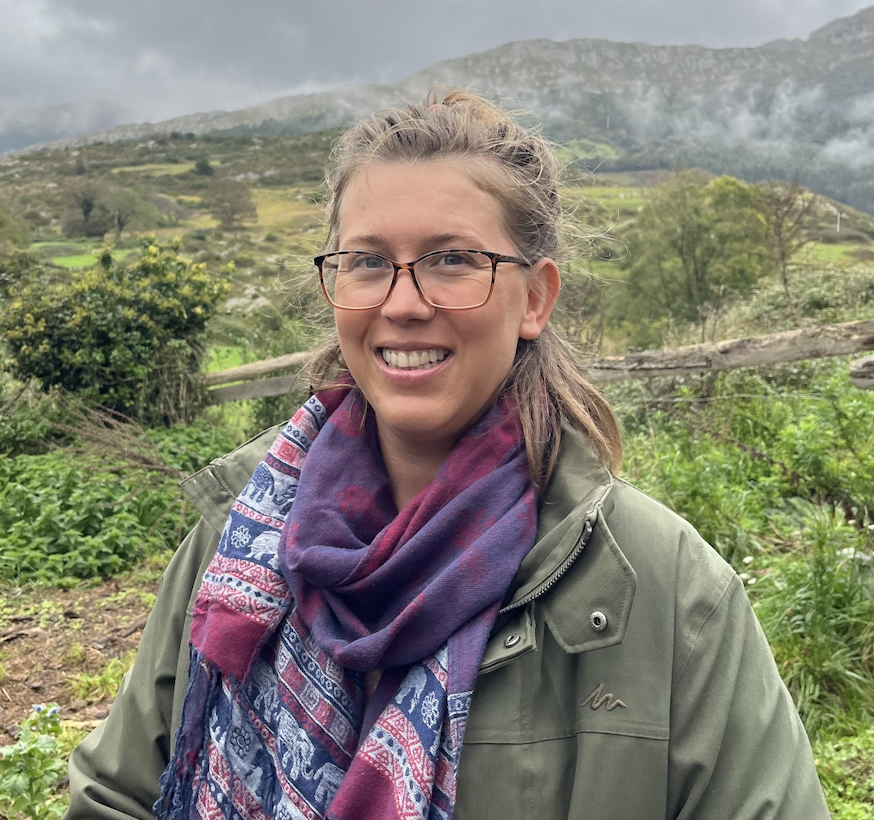
I spent a decade watching behaviour change in the natural world wholly dependant on the environment.
In Singapore, smooth-coated otters returned to waterways they'd abandoned for thirty years — not because anyone coaxed them back, but because the river was cleaned and the fish returned. In Chernobyl, wolves moved through abandoned apartment blocks and elk grazed in city streets — not because anyone rewilded them, but because humans left and the conditions changed.
The pattern was the same every time.
Change the conditions. Watch what happens naturally.
I didn't fully understand what this meant for parenting until I was in the thick of it myself — watching my own children's behaviour shift, not when I changed my strategy, but when I changed what surrounded them.
Behaviour is always a response to conditions
When children struggle with attention, emotional regulation or cooperation, the instinct is to look at the behaviour itself. To find a better consequence, a clearer boundary, a more effective approach.
Sometimes that helps, but what I have found is just like in nature the behaviour rarely exists in isolation.
It emerges from the interaction between a child and their environment.
When environments become overstimulating, attention fragments. When movement is limited, restlessness increases. When curiosity has no outlet, children seek stimulation wherever they can find it — and in a modern home, that's usually a screen.
The more useful question isn't how do I manage this behaviour. It's what conditions produced it — and what conditions would produce something different?
After a decade of observing wildlife behaviour and years of applying that lens to family life, I created The Wild Shift, which identifies several conditions — but here are four that are worth understanding first, because they're the ones most families are missing and the ones that shift things fastest. They're not complicated, and they don't require wilderness or a lifestyle overhaul.
1. Movement
Children are designed to move. Not in the structured, scheduled sense — not swimming lessons or football practice — but freely, physically, in ways that use the whole body.
Running, climbing, balancing, carrying things, building things, jumping off things. These aren't just ways to burn energy. They regulate the nervous system. They process stress. They do for a child's body what a long walk does for yours.
When movement is limited — and in modern childhood it often is — restlessness doesn't disappear. It finds another outlet. Usually a louder one.
Even ten minutes of genuine outdoor movement before school changes the quality of what follows. Not because of fresh air as a concept. Because the body got to do what it's built to do.
2. Natural light
This one is easy to underestimate because it's invisible.
Natural light regulates the body's internal clock — sleep cycles, cortisol rhythm, mood, attention. It does this through a completely different mechanism than artificial light, and no amount of indoor lighting replicates it.
Many children now spend the majority of their waking hours under artificial light. The body notices, even when we don't.
Time outside during daylight — not necessarily doing anything in particular, just being in it — helps restore rhythms the nervous system recognises. Rhythms that make regulation easier and sleep more reliable.
It doesn't need to be long. It needs to be real.
3. Curiosity
Curiosity is one of the most powerful drivers in childhood — and one of the most easily crowded out.
When a child is watching an ant carry something three times its size, or crouching over a puddle to look at what's living in it, or trying to work out why a stick floats and a stone doesn't — that child is completely, effortlessly focused. Not because someone taught them to focus, but because the environment gave them something genuinely worth focusing on.
This kind of attention is fundamentally different from the attention screens produce. Screens hold attention through stimulation — fast-moving, high-reward, always-on. Nature holds attention through genuine interest. The brain engages without effort, and in doing so, it rests rather than depletes.
All you need to do is to create conditions where it can show up.
4. Open exploration
Children need time that isn't directed. Time where nobody is telling them what to do, what to make, where to go or how long they have.
This is harder than it sounds in modern family life, where unstructured time tends to get filled — with activities, screens, organised play. We've become afraid of boredom, as though it's a problem to solve rather than a doorway to walk through.
But unstructured outdoor time — even twenty minutes with a patch of soil and no agenda — does something structured time can't. It builds the internal resources children need to manage themselves. Independence. Patience. The ability to generate their own interest rather than waiting to be entertained.
It also, quietly, reduces the pull of screens. Not because screens were banned. Because something more compelling showed up.
The science behind why it works
Two bodies of research underpin these four conditions and are worth knowing about — because once you understand the mechanism, the practices stop feeling optional.
The first is the work of environmental psychologist Roger Ulrich, whose research found that even brief exposure to natural environments measurably lowers cortisol — the body's primary stress hormone — within minutes. Lower cortisol means a steadier nervous system. A steadier nervous system means more capacity for patience, cooperation and emotional regulation. Not as a theory. As a measurable biological response.
The second is Attention Restoration Theory, developed by psychologists Stephen and Rachel Kaplan. Their research found that natural environments restore the brain's capacity for focus and regulation through what they called soft fascination — gentle, effortless engagement with the living world that allows the mind to rest rather than deplete. Unlike screens or busy environments which demand active concentration, nature holds attention without effort. The brain engages — and in doing so, it recovers.
But here's what's crucial about the Kaplans' work: soft fascination requires actual noticing. It doesn't happen automatically just because you're standing in a park. It happens when attention lands, even briefly, on something real. A spider's web. A cloud moving. The sound of water. That moment of genuine contact is what shifts the nervous system — not proximity to green space alone.
This is why the four conditions work together rather than in isolation. Movement lowers activation. Natural light restores rhythm. Curiosity creates the noticing that produces soft fascination. And open exploration gives the nervous system the unstructured time it needs to consolidate everything.
Small shifts. Real change. But sequence matters.
None of this requires dramatic change.
It requires consistency more than quantity. A short walk that actually happens every day matters more than an ambitious weekend plan that doesn't. Ten minutes of real outdoor time before school shifts more than an hour of structured outdoor activity on a Sunday.
But here's what I've learned from working with families — and what I wish someone had told me earlier:
Knowing the conditions is not the same as knowing how to install them.
Read this blog and you have four things to try. That's genuinely useful. But most parents who try to apply these conditions alone start in the wrong place, or try to build everything at once, or lose the thread the moment life gets hard — a difficult week, a school holiday, an illness — and find themselves back where they started wondering why it didn't stick.
It didn't stick because tips don't have structure. And structure is what makes change last.
The Wild Shift exists because the conditions alone are not enough. What makes them work is the sequence — each condition introduced in a specific order, building the capacity that makes the next one possible. Without the sequence, you have good ideas. With it, you have a system that compounds.
That's the difference between reading about this and actually living it.
Where this actually begins
These four conditions are where most families start to see things shift. But understanding which ones are most out of balance in your specific home — and where to begin — is different for every family.
If you'd like to explore that together, I offer a free discovery call. We'll look at what's actually going on at home, where the conditions need restoring, and whether The Wild Shift is the right fit for you.
If it is, I'll tell you. If it isn't, I'll tell you that too.