Dear Parent: What's Waiting on the Other Side
Dear parent,
Have you ever watched your child lose control so completely, so spectacularly, so visibly painfully, that you cried afterwards?
Not because you were frustrated. Not because you were exhausted, though you were that too. But because you could see the fear in their eyes. Because your child was frightened of themselves, of the size of what was moving through them, and you didn't know how to reach them inside it. And when it was over you lay awake wondering: is there something wrong with them? Is this normal? Why does it hurt them this much? Am I doing this wrong?
I know that feeling. I've sat with it many times with my eldest Roan, watching his sensitivity, the intensity of his emotions, the way a big feeling doesn't just visit him but takes him over completely. Wondering if I was missing something. Wondering if he needed something I didn't know how to give.
That wondering is one of the loneliest parts of parenting. And it's also, I've come to believe, one of the most important signals, because it means you are paying attention. You are seeing your child. You just don't yet have the language for what you're seeing.
This letter is for that parent. The one who can see it now but doesn't know where to start.
I want to tell you what's waiting on the other side.
Not perfection. I want to be clear about that first.
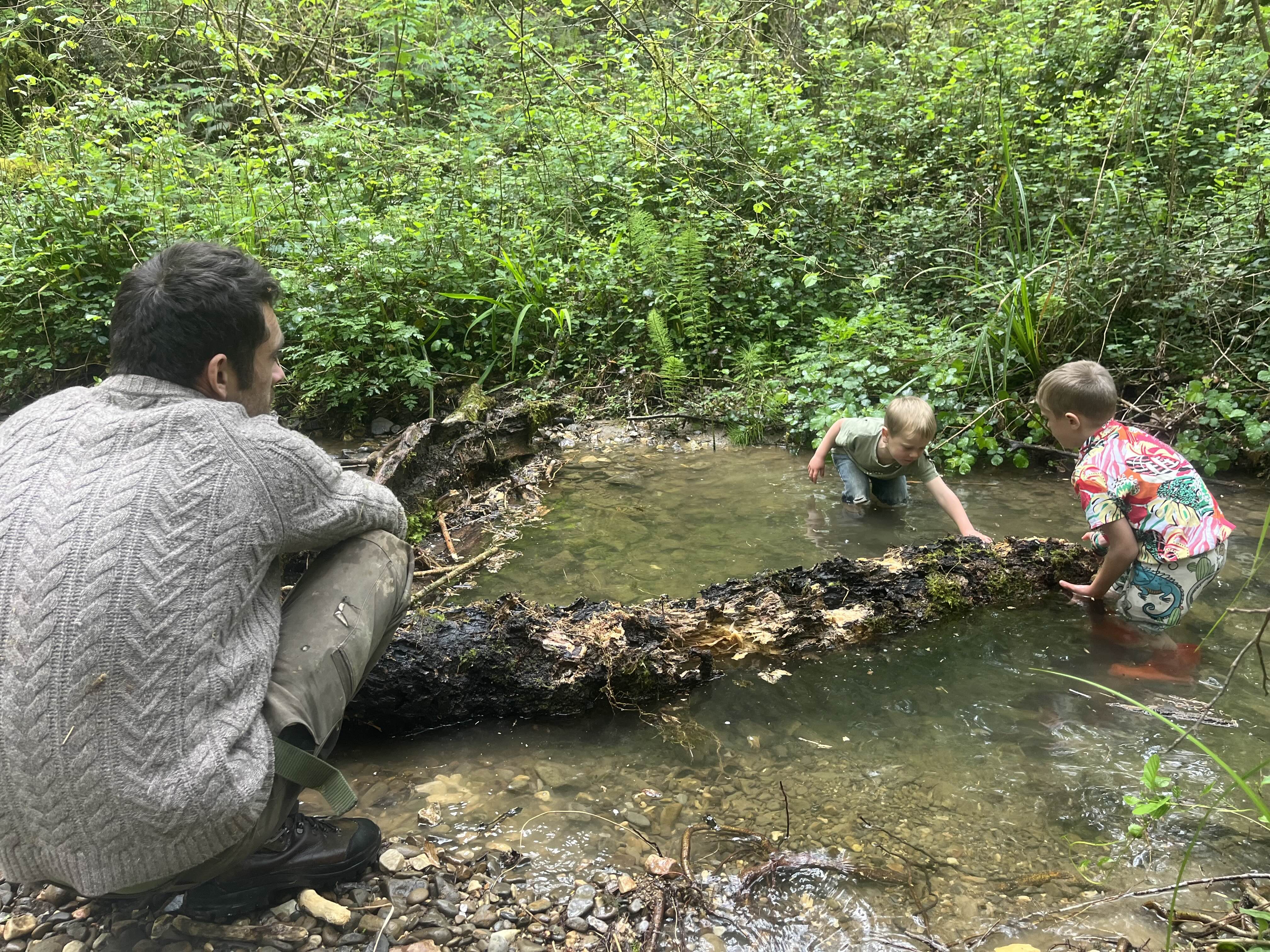
This morning my son Roan has been awake since early, building a crane. He's been at it for four days, inspired by a real crane he watched installing a bridge in our local town. It has collapsed at least twice a day since he started. Each time there's a moment of frustration, real, felt, expressed. And then he goes back to it. Stronger. Better designed. More robust than before.
When his brother Albus woke, he was allowed to join.
These days they are thick as thieves. Teammates eighty percent of the time. Yes, spectacularly at each other's throats the other twenty, they are brothers and I'll take those odds. But what's changed isn't that the twenty percent has disappeared. It's that Luke and I have the capacity to hold it. To stay curious instead of catastrophising. To come out the other end connected rather than fractured, without blame landing on anyone, without guilt following me around for the rest of the day.
The morning moved into breakfast. Into coffee in bed. Into snakes and ladders, the cat stealing the dice, which happens more often than you'd think, and nobody losing it because they lost the game or because the cat cheated.
That's it. That's the shift.
Not the absence of hard moments. The presence of something steadier inside them.
So what does it actually look like, when the conditions start to change?
It looks like a child who chooses to go outside in the morning before you've suggested it. Not every morning. But some. Because outside has become associated with something good in their body rather than something imposed on them.
It looks like the after-school hour feeling different. Not always easy, but with more space in it. More curiosity. Less of that particular tension that used to fill the house the moment the door opened.
It looks like triggers becoming less frequent. The things that used to set everything off, a transition, a disappointment, a brother looking at them wrong, landing differently. Not because your child has suddenly become someone else. But because their baseline has shifted. Because the conditions around them have quietly, gradually changed.
It looks like meltdowns still happening, because they will, they always will, big emotions are part of being human and especially part of being a child, but not lasting as long. The storm coming and going more quickly. Recovery arriving sooner. Connection finding its way back faster than it used to.
It looks like your child rebuilding the crane instead of abandoning it.
And perhaps most importantly, it looks like you.
It looks like trusting yourself in the hard moment instead of freezing. Having enough steadiness inside you that when the spectacular meltdown comes, and it will, you can meet it with curiosity rather than matching it with your own overwhelm.
It looks like knowing in your body: this isn't them versus me. This isn't because they want to upset me. This is a child who has lost control in the overwhelm, and they need me to be the calm they can't find yet.
That knowing changes everything. Not because it makes the moment easier exactly, sometimes it's still hard, still loud, still a lot, but because you come through it without the guilt. Without the wondering. Without the hours of replaying what you should have done differently.
You handled it. Not perfectly. But with enough confidence and enough connection that you all came out the other end intact.
That's congruence. That's what it feels like when what you believe and how you act start to line up.
The shift isn't a transformation that happens once. It's a practice that compounds, quietly, steadily, in all the small moments you choose to show up for.
The two minutes outside before the school run. The question asked with curiosity instead of the correction made in frustration. The breath you took before you responded. The crane you let him rebuild without intervening.
Small. Repeated. Real.
And one ordinary Sunday morning you'll be drinking coffee in bed, watching your children play snakes and ladders, the cat making off with the dice again, and you'll realise, almost without noticing, that something has shifted.
Not everything. Not forever. But enough.
Enough to trust yourself. Enough to trust them. Enough to feel, even in the hard moments, that you know what you're doing and where you're going.
That's what's waiting for you.
If you're ready to start shifting the conditions rather than managing the behaviour, the Three-Step Reset Guide is your starting point. It's a simple, practical framework designed to help you observe more clearly, react less, and tend the environment your child is actually growing inside. Download it free at thewildshift.com/three-step-reset